Product Overview
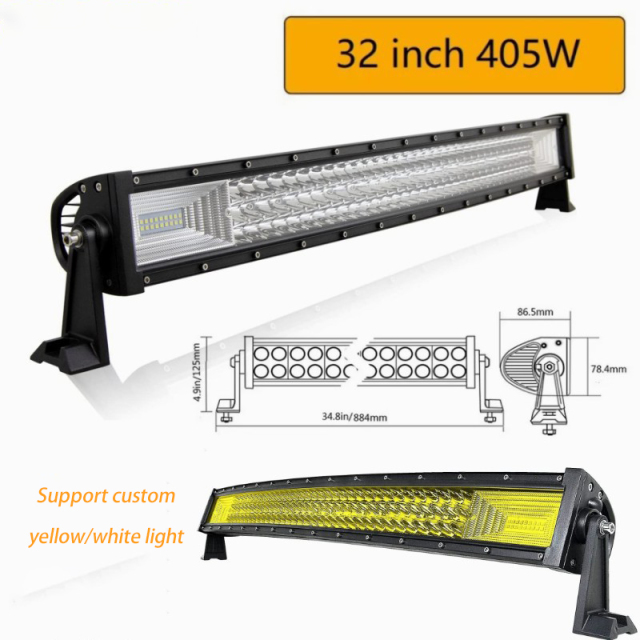
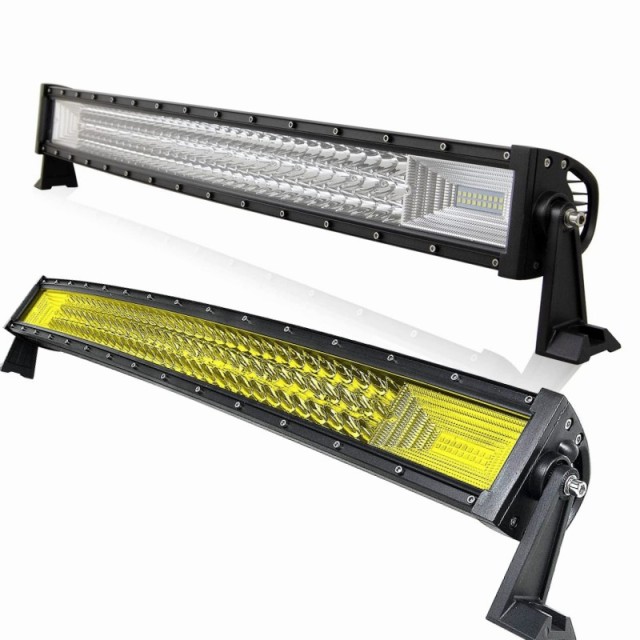
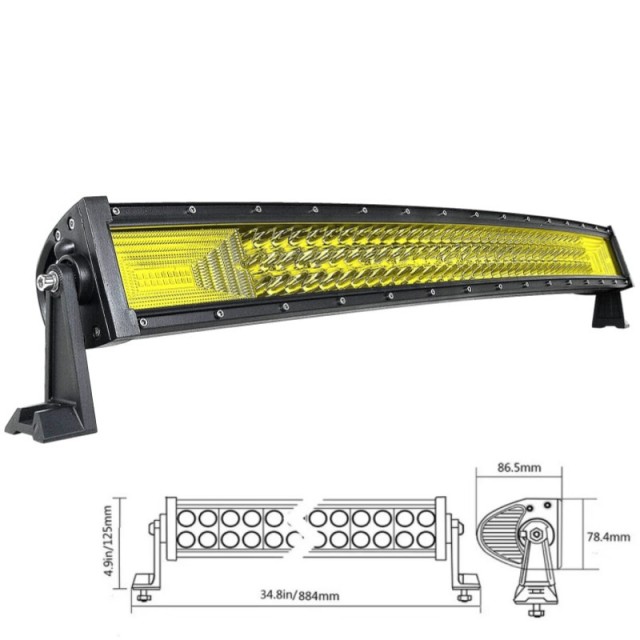
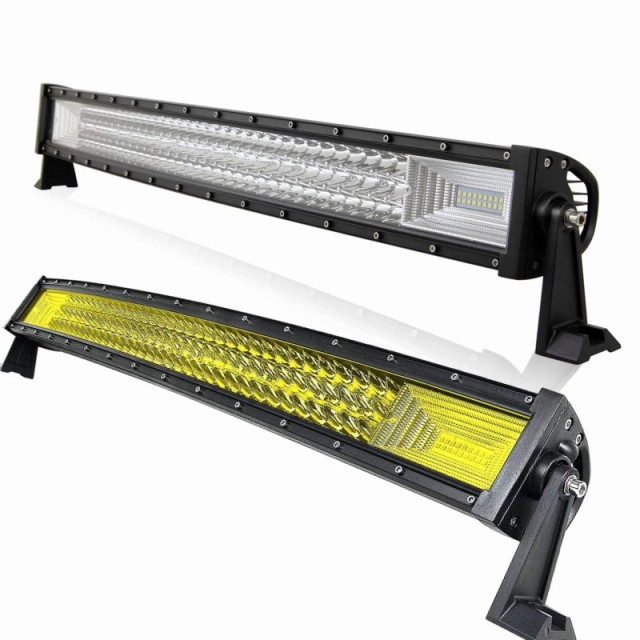
This off road LED light bar puts two light colours in one rectangular housing: a warm 3000K amber output and a bright white output, both produced by a triple-row LED array. The beam is a spot and flood combination, so the light spreads wide enough to show the edge of a track while still carrying a concentrated centre down the road ahead.
In practice that means one fitting covers two very different jobs. The amber side is the one you use when the air in front of the vehicle is thick — fog, driving rain, snow, or the dust cloud hanging behind a truck on a gravel haul road. The white side is the one you use when the road is simply dark and you need to see further: a junction, a sign face, a parked machine, the far edge of a yard.
It suits vehicles that work rather than vehicles that get polished: haulage trucks and tractor units, pickups and 4x4s, SUVs, tractors and sprayers, quarry and mining plant, boats and general heavy equipment. Wherever it is fitted, it draws from the vehicle's own lighting circuit and is aimed on its side brackets, so it behaves like part of the vehicle rather than an add-on.
If you are specifying 4x4 off-road lights for a mixed fleet, this is the model that answers the fog-lamp requirement and the driving-lamp requirement in one housing, which keeps the build sheet shorter and the spare-parts shelf tidier.
Two lamps, one part number. A working vehicle usually ends up carrying a fog lamp for bad weather and a driving lamp for distance, which means two part numbers, two fittings and two aiming sessions. This bar covers both duties in one housing, so the build sheet gets shorter and the workshop keeps fewer lines on the shelf. A part that sells to two customers. On a dealer's shelf the same bar appeals to the off-road buyer who wants a wide, confident beam and to the haulage or plant operator who wants to see through dust and spray. LED light bars for trucks are usually sold on output figures alone; this one gives counter staff something to demonstrate, because the two colours visibly do different jobs. A specification that stays put. The build is set by us as off road LED light bar suppliers — the triple-row array, the two light colours and the bracket arrangement are the same on every order, so a repeat purchase matches the first one and a fleet stays consistent across vehicles bought at different times. Built for the conditions it is sold for. Dust, spray, grit and long shifts are the working environment here rather than an occasional weekend, and the bar is put together on that basis rather than on what looks good in a photograph. The triple-row LED optic system combines spot and flood patterns in one beam, providing broad angular coverage with a concentrated center for long-range and peripheral visibility. Review the lumen output and beam-spread angle specifications for the exact performance figures. The housing is made from high-grade aluminum and polycarbonate to resist moisture, impact and temperature swings, and the design is built to automotive lighting standards—confirm the exact standard for your market.
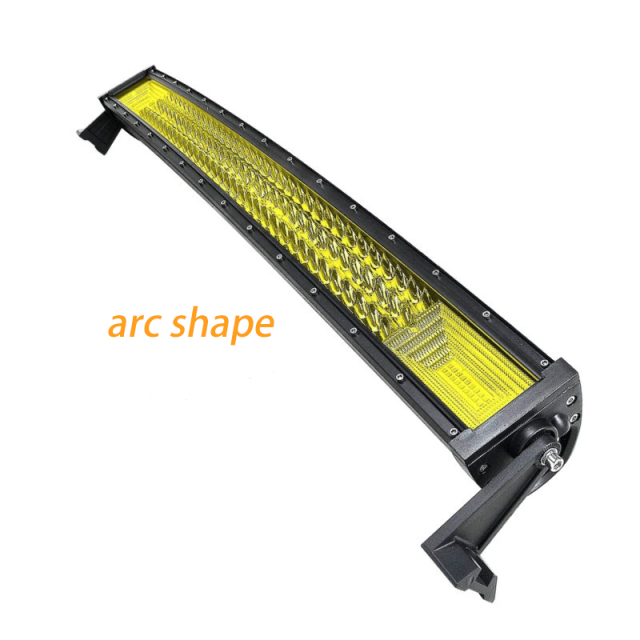
Dual-Color White & Amber Modes
- Amber for thick air. Warm 3000K amber is the colour that stays readable in fog, heavy rain, snow and airborne dust. It reflects far less glare back at the driver than white does, which is the practical argument for an amber LED light bar when visibility collapses.
- White for reach and detail. The white output is for clear nights, unlit trunk roads and yard work — anywhere you need to judge distance and pick out edges, markings and obstacles.
- Windshield-safe by nature. Because amber sits easier on the eye, it does not wash the windscreen with reflected glare the way a close-range white lamp can, and it leaves the driver's night vision less disturbed.
- Condition-matched, not season-matched. You do not fit this in November and take it off in March. On a dusty convoy run you want amber; on an empty night road you want white; the same bar covers both without a second fitting.
- A truck-focused colour pair. In a typical LED light bar for truck installation, the amber side earns its place in motorway spray and convoy dust, where white-only output would bounce straight back at the driver.
- Tell us how you want them switched. Combined, amber-only and white-only control are all practical options depending on how the bar is wired, so confirm the arrangement you need with us and we will build to that specification.
Optical System & Beam Pattern
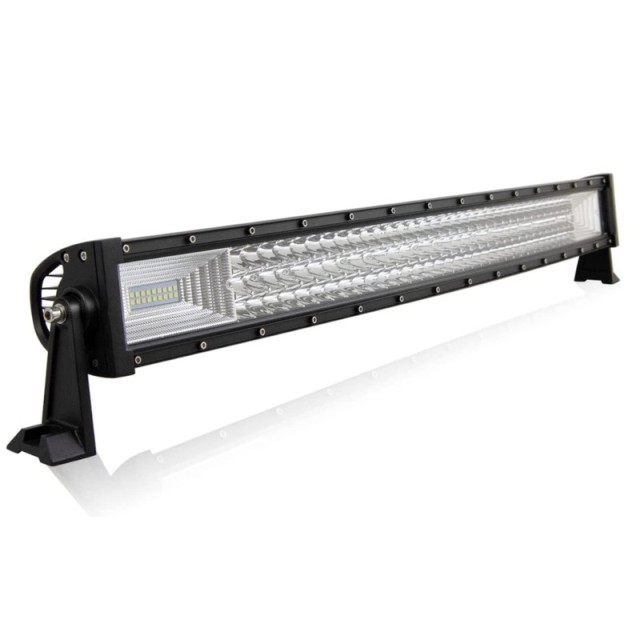
The optical stack is what decides whether a bar is genuinely useful or merely bright. Three rows of LEDs sit behind the lens, each row aimed to do a slightly different job: the centre of the array carries a concentrated spot down the road, while the outer rows fan light across the verges and the working area. Because the rows are stacked and aimed together rather than spread out, the spot and flood patterns merge into one continuous field instead of leaving a dark band between the middle of the beam and its edges.
That merging matters more than raw output. A driver reading a gravel track needs the near ground, the road edge and the distance in the same glance; if any one of those drops out, the eye has to work harder and reaction time suffers. The combo pattern here is set up so all three are lit at once.
Consistency is the difficult part for LED light bar manufacturers: two bars from the same production run have to throw the same pattern, or a fleet fit-out turns into a matching exercise. The array and the housing are built as one assembly rather than put together from bought-in modules, which is how the beam stays predictable from one order to the next.
If you already run a white LED light bar on part of the fleet, the white output here sits close enough in colour to work alongside it without the two looking mismatched on the same vehicle.
Housing, Mounting & Compatibility
- A rectangular body with a bracket at each end. The housing is a straight bar, so the mounting footprint is easy to plan around and the unit sits close to the surface it is fixed to instead of standing off on a frame.
- Metal that carries the heat. The aluminium housing is part of the cooling path, not just a shell. It draws heat away from the emitter board and spreads it across the body, which keeps output stable through a long shift instead of fading as the bar warms up.
- A lens that takes hits. The polycarbonate front absorbs stone strikes and site debris that would starve or crack a glass lens on a gravel road.
- Mount it where the vehicle gives you a surface. Roof rack, front bumper, bull bar, headache rack or cab guard — the side brackets are not tied to a single position, so the same bar works on a pickup and on a tractor unit.
- Aim it once, then lock it. The brackets allow the bar to be angled after fitting, so the beam can be set for the vehicle's ride height and the driver's position rather than accepted as it arrives.
- Rigid where it matters. The end brackets carry the bar along its length rather than clamping it in the middle, so the housing does not flex on corrugated ground and drift off aim.
- Float the dirt off before you wipe. Dust, dried mud and road film should be rinsed away with water before anything touches the polycarbonate lens. Wiping a dry lens drags grit across the surface and leaves fine scratches that scatter light and soften the beam. A soft cloth or sponge with a mild soap is all it needs; scouring pads, abrasive cream and solvent cleaners such as brake cleaner, petrol or thinners will cloud polycarbonate permanently. Keep the pressure washer at a distance. Washing the vehicle is fine, but holding the lance close to the lens edge, the housing seams or the cable entry is not — high pressure at short range can work water past a seal that is otherwise doing its job. Rinse from a step back and let the water carry the dirt off. Go around the fixings after the first hard run. New brackets settle once they have been through a long stretch of corrugated track, gravel road or site work. Check the bracket bolts and the mounting surface after that first trip, then again at service intervals: look for bolts that have started to back off, cracks or lifted paint where the bracket clamps down, and any movement between the bar and the surface it sits on. Re-aim after a knock, don't just re-tighten. If a branch, a gate post or a load catches the bar, tightening the bolts is only half the job. Park facing a wall or a garage door after dark and set the beam back where it was, because a bar that has shifted a few degrees throws the centre of the spot off the road without looking obviously wrong from the cab. Leave the back of the housing in open air. The aluminium body is part of the cooling path, so it needs airflow across it. Do not wrap the bar in foam, a blanket or a cover while it is in use, do not mount it tight against a flat panel with no gap behind, and never paint over the housing or the lens. Look after the connection as well as the lamp. A bar that has gone dim or intermittent is more often a corroded plug or a loose earth than a failed emitter. Keep the connector dry, check the earth return, and clean up any green or white corrosion on the terminals before assuming the light itself has failed. Store spare bars properly. Stock kept on the shelf should stay in its carton, with nothing heavy stacked against the lens face and nothing solvent-based stored alongside it. Salt air and winter road salt are worth washing off promptly rather than leaving on the housing for a season. Keep a small kit on the shelf. A set of bracket bolts and washers and a spare connector pigtail will cover most of what a fitter needs after a knock or a refit; ask your sales contact what is available as a service part for this off road LED light bar, and what the warranty covers if a lens or bracket does take damage that is not the customer's fault.
Performance for Professional Operators
Operators judge a work light at the end of a shift, not at the moment it is switched on. Three things decide that verdict: whether the light reaches far enough to be useful, whether it is comfortable to drive behind for hours, and whether the fitting survives the vehicle.
Comfort first. A beam that is bright but harsh tires a driver faster than a softer beam that reads the road cleanly, because the eye keeps re-adjusting to the glare. The white LED light bar output here is set for contrast rather than raw brightness — road edges, lane markings and obstacles stand out without the surface washing out in front of the windscreen.
Then fitment. Owners who fit 4x4 off-road lights usually care about one thing above everything else: does the pattern stay usable when the vehicle is pitching over uneven ground? A wide, even field of light answers that better than a narrow hot spot, because the driver is not chasing a moving patch of brightness.
Then readiness. The bar is a plug-and-play fit into the vehicle's existing electrical system, so it adds no control box and no extra failure point, and the output is balanced against draw so the light you get is light the system can actually sustain.
Finally familiarity. A driver who knows exactly what the beam shows at speed makes better decisions than one still working out a new lamp on the first night out.
Fleet Integration & Operational Benefits
- Drops into the electrics already on the vehicle. The bar connects into the existing lighting circuit with standard connectors and controls, so fitting does not mean designing a new loom for every unit.
- A mixed fleet can share one specification. The same bar goes on a tractor unit, a tipper, a service pickup or a site 4x4, which keeps spares, fitting knowledge and driver familiarity in one place.
- Distance work belongs to the spot section. On a LED light bar for truck duty over unlit trunk roads, the concentrated centre is what gives the driver time to react to a junction, a slow vehicle or debris on the carriageway.
- Close work belongs to the flood section. The white LED light bar pattern spreads wide enough to light a yard, a loading bay or the area around a machine, so the crew on the ground is visible as well as the load.
- Night schedules hold. Predictable illumination means a driver keeps to a route instead of slowing to a crawl through every unlit section, which is where late deliveries and tired decisions come from.
Use Scenarios
- Motorway and trunk-road running in spray. The wide skirt shows the lane edge and the shoulder when the vehicle in front is throwing water back at you, and the centre keeps the next junction in view.
- Convoy work in dust and spray. An amber LED light bar setting keeps the road ahead readable when the vehicle in front is raising a dust plume, and it stops the driver's own view filling with reflected glare.
- Forestry and site access tracks. Rough surfaces, overhanging branches and soft edges: the flood section shows where the track actually ends before the wheels get there.
- Winter roads and snow clearing. Ploughs and spreaders work in the worst visibility of the year, and a bar that reads through falling snow is worth more than one that simply puts out more light.
- Yard, depot and loading-bay work. Fleets that run LED light bars for trucks across several depots use the wide pattern for manoeuvring and for lighting the ground around the vehicle during loading.
- Marine and dock work. On a boat or around a quay, the same combination lights the water's edge and the structure ahead, and the housing copes with salt air and spray.
- Haulage and off-road navigation put lighting under a different kind of pressure from ordinary driving. On a graded gravel road the surface changes from hard-packed to loose within a few metres, the verges disappear, and the only warning of a soft shoulder is a change in texture that a narrow beam will never show you. A wide skirt of light combined with a bright centre is what lets a driver read that surface at speed. The same applies to everything beside the road. On rural routes, junction markers, gate posts, culverts and machinery standing at the edge of the carriageway are easy to miss when the light falls away sharply at the sides. An even, wide pattern brings those objects into view early enough to act on rather than react to. Weather is the other half of the problem. Suspended dust, fog and heavy precipitation all scatter light back at the driver when the beam is too intense and too narrow, which is exactly when a second colour in the bar becomes useful: the amber side of an off road LED light bar cuts through particles instead of bouncing off them. Fitting follows the vehicle rather than the other way round — the bar goes where the chassis gives a firm surface and a clean line of sight, and it feeds from the existing lighting circuit. For operators specifying 4x4 off-road lights for night work, the practical measure is not the figure on the box but how quickly a hazard resolves into something recognisable. A beam that shows the road edge, the shoulder and the obstacle in the same glance is doing its job.
- Tractors and sprayers working into dusk. Field work rarely finishes on schedule, and a bar that comes on at the headland lets an operator finish the run instead of parking up. The wide pattern shows the crop edge and the marker at the same time.
- Harvest and haul-out shifts that run past dark. Loaders moving trailers around a yard need light on the ground crew as much as on the load, and the flood section covers both.
- Mining and quarry haul roads. Airborne dust is constant, so an amber LED light bar setting does most of the work here — it keeps the road ahead visible without turning the dust into a white wall.
- Machines rather than vehicles. Wheel loaders, excavators, dozers and site dumpers often have a lighting circuit but no convenient place to add a lamp; the bracket mounting and rectangular body give a flat, predictable footprint to work with.
- Integration with machinery controls. The bar is designed for existing vehicle lighting systems and standard controls, so it does not need its own operator interface in the cab.
- Downtime and ground safety. Clear light on the working area is a safety measure as much as a productivity one — the people on foot around a machine are the ones most exposed when the illumination is poor.
- Built by people who supply this sector. We work as off road LED light bar suppliers to farms, quarries and plant hire operators, so the bar is put together around wash-down, dust and vibration rather than around a specification sheet.
Key Specifications
| Brand | JOPOWER |
| Light source | Triple-row LED array |
| Light colours | 3000K amber and white |
| Beam pattern | Spot and flood combo |
| Housing | Aluminium |
| Lens | Polycarbonate (PC) |
| Shape | Rectangular |
| Mounting | Side brackets with adjustable aim |
| Wiring | Connects to the vehicle's existing lighting circuit |
| Customisation | Size, colour, logo and packaging |
| Typical vehicles | Trucks, 4x4, SUV, agriculture, mining, marine, heavy equipment |
Custom Builds & Branding
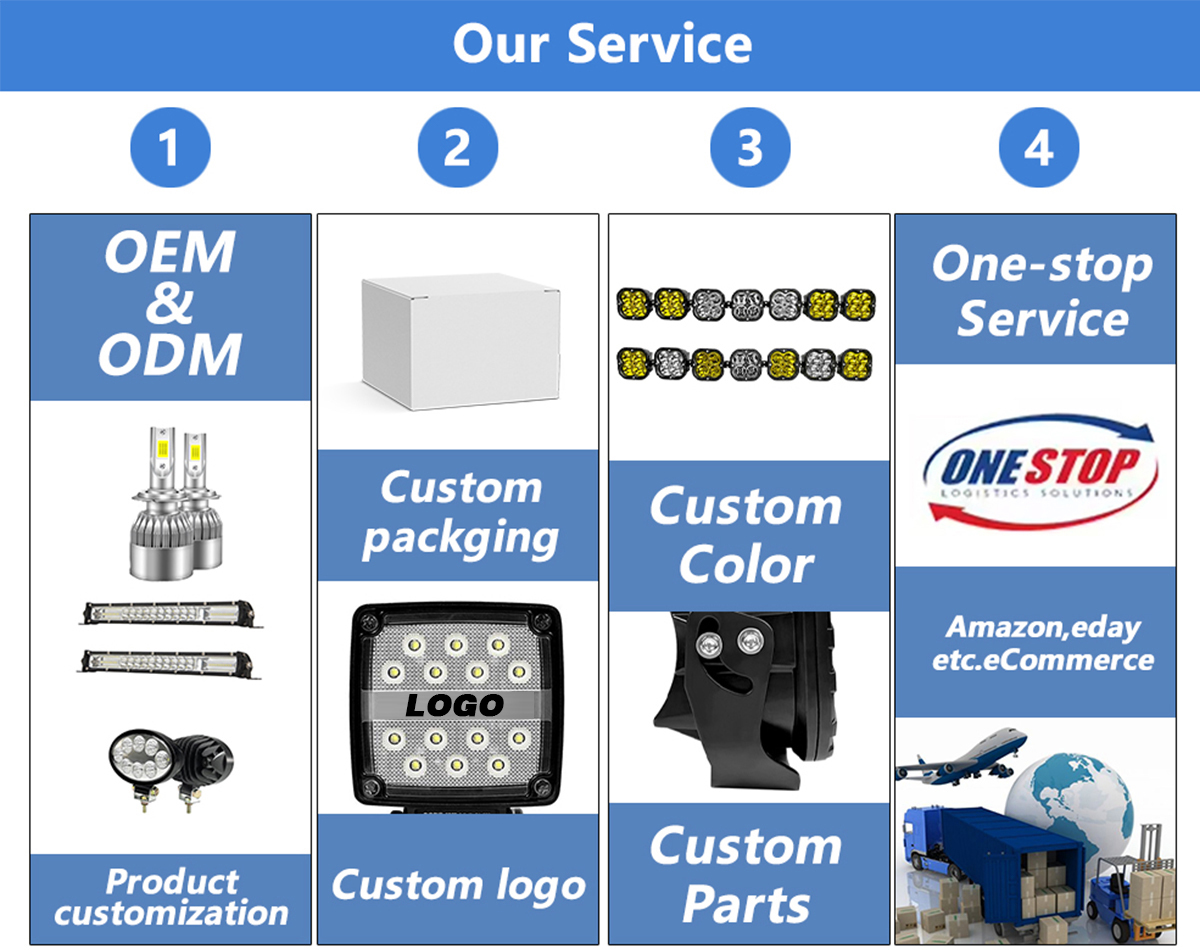
Custom work starts with what the customer needs to sell, not with what is easiest to build. Within this model we can change the technical specification, the housing style, the size, the output colour, the logo and the packaging, and handle the whole change as one development process instead of a string of separate requests.
For a distributor building a house brand, the visible parts matter as much as the light: a logo on the housing, the model naming on the carton, the printing and the pallet marking all come from your artwork. Send the files and the packing requirement and they are worked into the build.
Tooling and development stay in-house, so a change is not passed to a third party and returned with a different tolerance. For a buyer who has spent months aligning artwork and specification with several LED light bar manufacturers, that is the difference between a settled range and another round of samples. It matters most on repeat orders, where the second run has to match the first one exactly.
A logo on an existing bar is the easy part. Changing the size, the colour of the output or the packing usually becomes a separate project elsewhere; we would rather quote the whole change in one go.
Custom runs also make sense when a range of LED light bars for trucks has to sit under one design language — the same housing treatment, the same connector approach and the same branding across the models you stock.
Before a custom order is confirmed, send the artwork, the specification you want changed and the packing requirement, and we will come back with what can be built and how it affects the schedule.
Ordering & Delivery
- Standard builds. Orders on the standard specification move on our 7-day fast shipping schedule.
- Custom builds. Once the specification, logo, packaging or output colour changes, confirm the current lead time with your sales contact before you promise a date to your own customer.
- Seeing the product first. If you need to inspect a bar before committing to a volume order, ask your sales contact about sample availability and the terms that apply.
- Payment and shipping terms. Payment method, shipping terms and destination port are agreed per order — ask your sales contact for the terms that apply to your market. Confirm the packing specification before production begins.
- Quantities and mixed orders. Ask about combining this model with other items on the same shipment and confirm the quantity breaks that apply to your volume.
- Documentation. Tell your sales contact which documents your market needs — commercial invoice, packing list, certification copies — and they will be prepared with the shipment.
Scale & Supply Capability
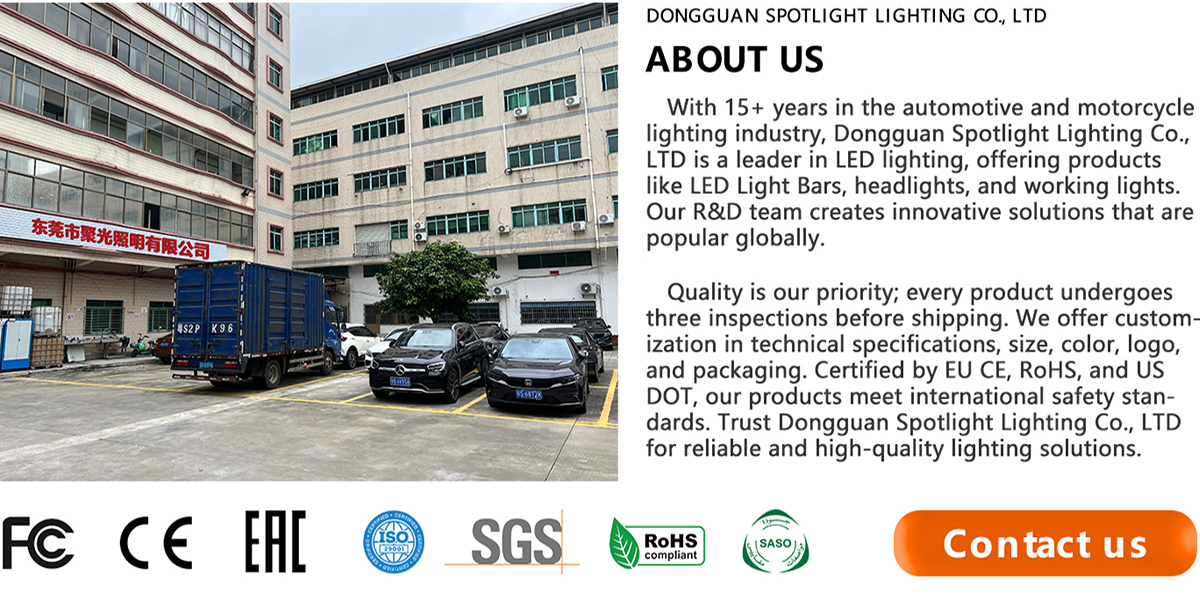
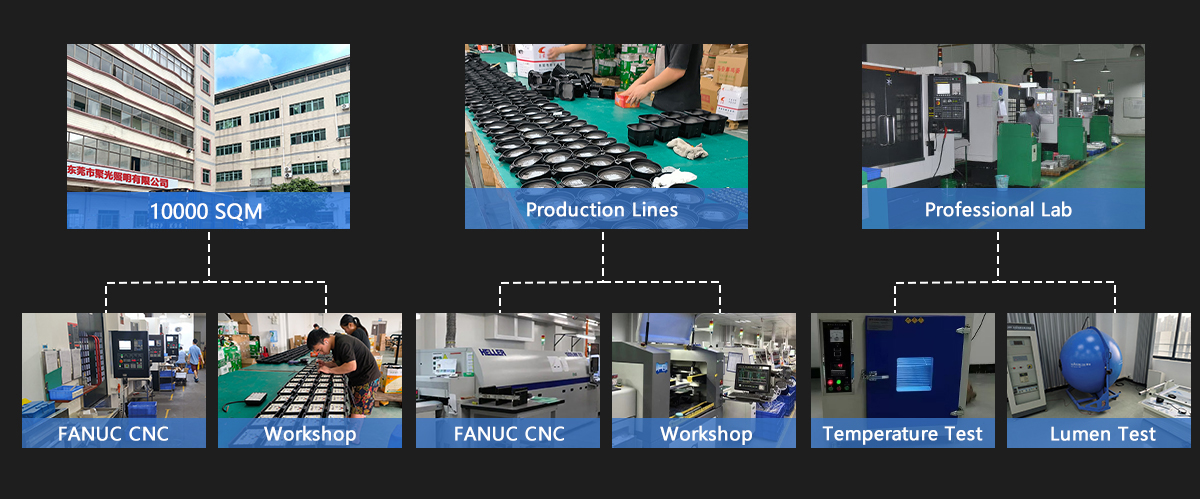
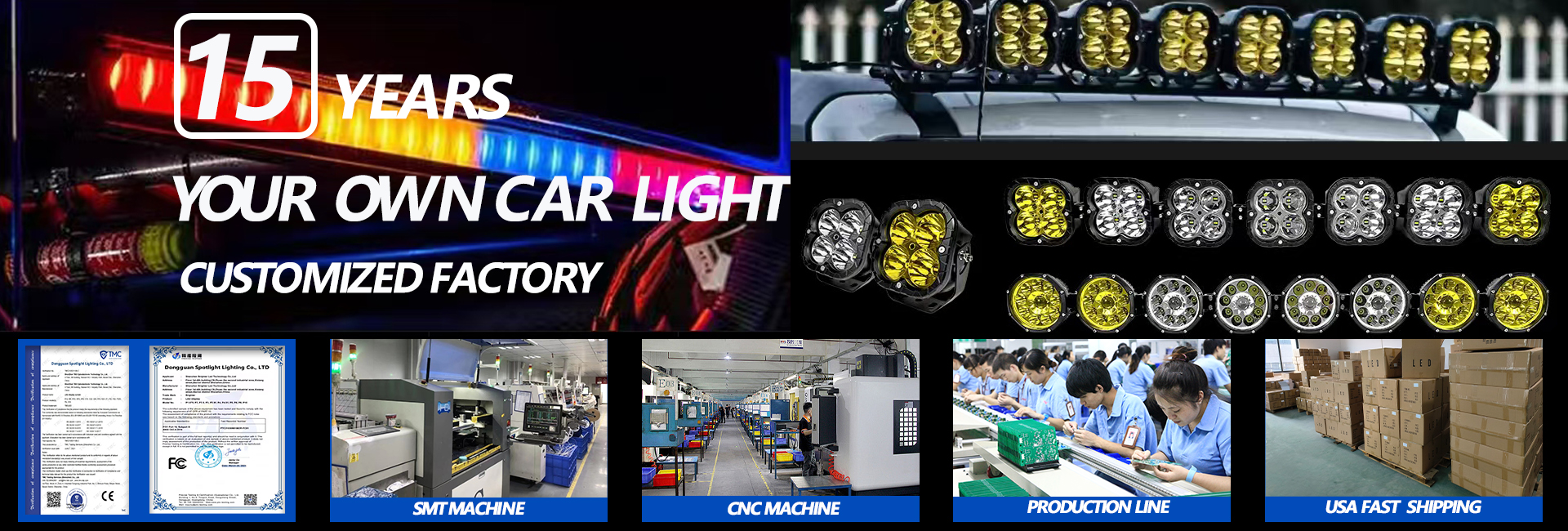
JOPOWER is the brand of our own factory in Dongguan, China, founded in 2010 and run by a team of 20–30 people with 15 years of vehicle lighting production behind them. We add 5–10 new styles every month, hold EU, CE, RoHS and US DOT certification, and put every unit through three full inspections before it leaves us. Because the designs are developed in-house, we can tailor specification, style, size, color, logo and packaging, and items in stock ship in as little as 7 days.
FAQ
Can I request a custom design, such as a different size or our own logo?
Yes — size, colour, logo and packaging can all be customised. As off road LED light bar suppliers, custom work is normal production for us rather than a special project, so we work from your artwork and target specification instead of a fixed template. Send the details you want changed and we will confirm the build, the artwork requirements and the packing before production starts.
What materials are used in the construction?
An aluminium housing and a polycarbonate (PC) lens. It is the pairing most LED light bar manufacturers settle on for working vehicles, and for good reason: the aluminium body takes impacts and carries heat away from the LEDs, while the polycarbonate absorbs stone strikes that would crack glass and does not cloud over a winter of salt and grit.
Is professional installation required?
Not strictly, but we do recommend it. The bar is designed for versatile mounting and connects to the existing lighting circuit, so a competent fitter can handle the job — what matters is that the aim is set correctly and the fixings are properly tightened, because an LED light bar for truck use is only as good as its alignment.
How do you ensure reliability and compliance?
Every bar is inspected before it is packed, and the range is built to CE, RoHS and DOT standards. If your market needs copies of the compliance paperwork with the shipment, tell your sales contact and they will be prepared with the order.
Which vehicles can this off road LED light bar be fitted to?
Trucks, 4x4s, SUVs, ATVs, boats, tractors, loaders and other heavy equipment — anything with a lighting circuit and a firm, flat mounting surface. Send us the vehicle list for your fleet and we will confirm the mounting position and aim for each one.
What does the spot-flood combo give me that a single beam would not?
Reach and width at the same time. A spot-only bar lights a narrow tunnel and leaves the verges dark; a flood-only bar lights the verges and gives up distance. The combo keeps a bright centre on the road while the outer rows fill in the edges, so a hazard at the side of a track shows up as early as one straight ahead.
How should I clean and look after the bar?
Wipe the front with water and a soft cloth, and use a mild soap for road film or mud. Avoid abrasive pads and solvent-based cleaners, which dull polycarbonate, and keep a pressure washer back from the lens. Check the bracket fixings after heavy going and re-aim the bar if it has taken a knock.
Can I use the amber setting on the road?
That depends on where you are and how the vehicle is registered. Auxiliary lighting rules differ between markets, and amber is treated differently from white in many of them. Check the rules that apply to your market and to on-road versus off-road use before fitting.