Product Overview
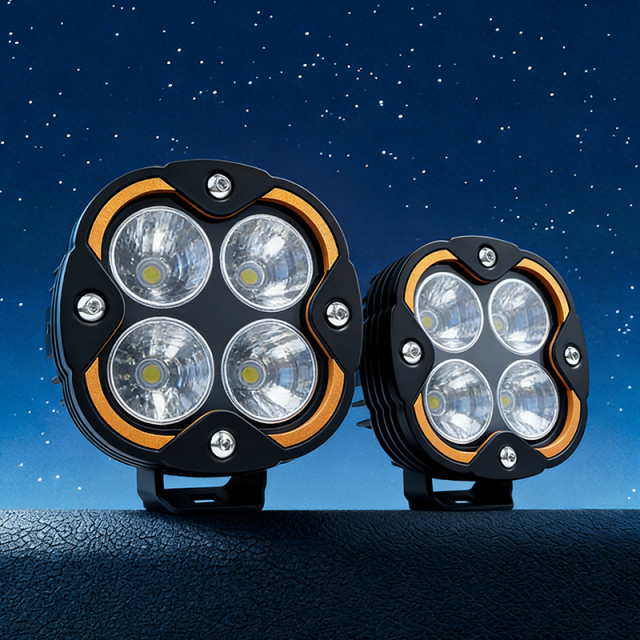
Twenty thousand lumens from a five-inch lamp is a lot of light in a small housing. Workshops fit them to customer cars, dealers stock them beside their bars, and fleet fitters use one part number across pickups, vans, boats and side-by-sides. If you are weighing up off road led light bar suppliers on specification alone, the details that decide it are all here — the sealed aluminium housing, the stainless bracket, the three beam types and the four cover colours that change the light for fog, dust, rain and snow.
Housing, Lens and Sealing
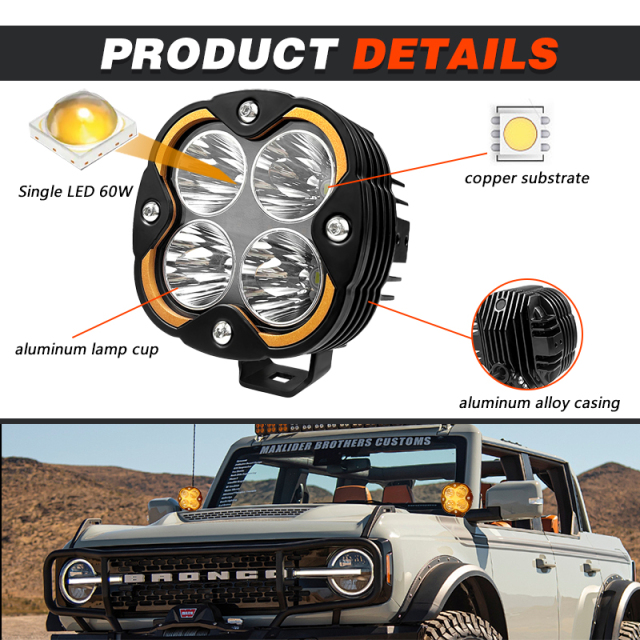
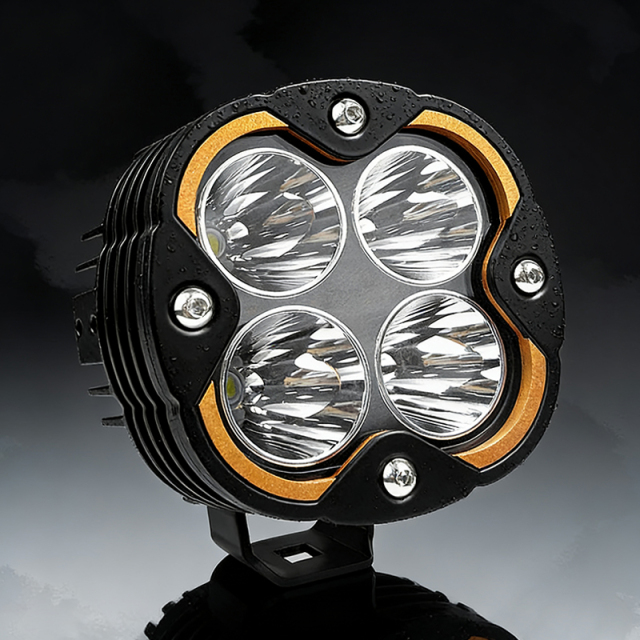
Aluminium is the material most led light bar manufacturers settle on for one reason: it moves heat. In this lamp the path runs from the chip, through a copper substrate and an aluminium lamp cup, into a finned alloy casing that puts surface area where the air can reach it. The lens is polycarbonate, because it shrugs off stone chips and branch strikes that would star glass. The bracket and its fasteners are stainless steel rather than plated steel, so the threads stay usable after a few seasons of salt and grit. The finish is matte black with an orange accent ring, which reads as an accessory on a factory bumper rather than a part that was meant to be there all along.
Output, Efficiency and Service Life
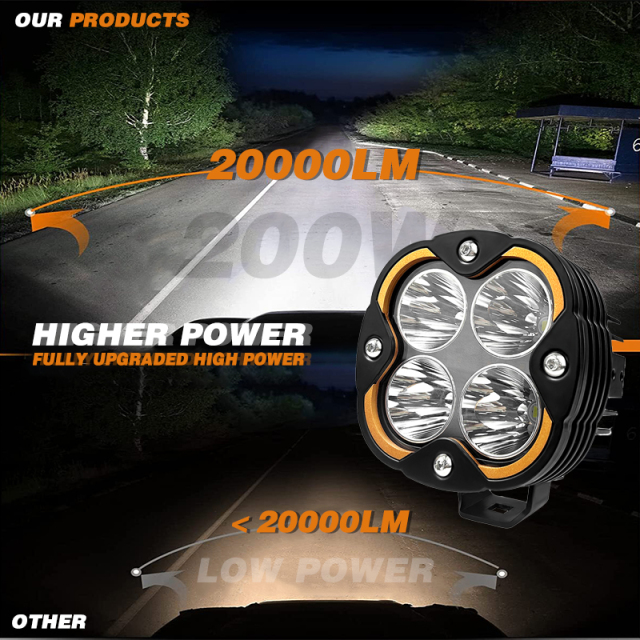
The figure that matters is the one still coming out of the lens ten minutes later. A driver that lets voltage sag dims the lamp as the wiring warms, so output drops exactly when the road is darkest. The stable current design here holds brightness as supply voltage moves and keeps switching noise out of the vehicle's radios and instruments. Output is immediate at switch-on and the beam does not fade as the casing warms. Where the headroom helps Two hundred watts is more than a compact lamp needs for close work, and that headroom is what makes these usable as truck driving lights on a long night run — reach comes from the lens and the aim, not from running the LEDs flat out. It is also why the unit stays light enough to hang off an A-pillar or a roof rack without the bracket working loose. It is used in off-road transportation, marine navigation, emergency response, and outdoor expeditions, where rough terrain, night work, and adverse conditions make focused auxiliary light important. The light supports safer driving and operational efficiency when primary lighting is not enough, and its integration with vehicle electrical architecture is intended to meet applicable performance and regulatory requirements. For fleet managers and equipment operators, that means less downtime and stronger return from the equipment.
Mounting and Installation
- Choose the position first: bumper, grille, bull bar, A-pillar or roof rack — the same real estate you would use for a led light bar for truck builds. On a boat, the bow rail or hardtop; on an ATV or UTV, the front rack or cage.
- Check what sits behind the panel. The housing is about 3.15 in deep and the finned section needs air, so leave clearance for the casing and a gentle bend radius for the cable.
- Mark through the bracket, drill, then seal the holes. Paint any bare metal and bed the fasteners in sealant — an unprotected hole in a bumper or a transom is where rust starts.
- Set the angle before you torque anything down. Snug the bracket bolt, tilt the lamp to the aim you want, then tighten it fully.
- Wire it as its own circuit: fused feed, relay, and a dash or panel switch.
- If you are replacing an existing lamp, keep the original feed and switch. Most off road led light bar suppliers use the same two-wire convention, so the old wiring usually works without pulling new cable.
- Aim at night on flat ground. Take the spot down the road, the flood low and wide, and check that neither throws into a mirror or into oncoming traffic.
- Test with water before the trim goes back on. A hose over the housing and a check of every connection will find a bad seal or a loose crimp while it is still easy to fix.
Road Use and Compliance
- Supplementary lighting, not a headlamp — these pods are built as auxiliary lamps. Keep the factory headlights intact and on a separate circuit so the vehicle still meets its type approval when the auxiliary switch is off.
- Rules change with the market — what is allowed for led driving lights differs by country and often by state or province. Ask your local vehicle inspection authority about mounting height, the number of forward-facing lamps permitted and whether they may be used in moving traffic at all before you wire a set onto a road vehicle. Tell your sales contact which market the order is going to and ask for the certificate set in PDF so it can travel with the shipment. An auxiliary lamp that can be shut off independently is what most inspectors look for; a lamp hard-wired into the headlight circuit is the one that causes problems.
- Aim before you judge legality — set the beam low and slightly toward the near side, then check at night that it does not strike mirrors or oncoming windscreens. A compliant lamp aimed into traffic still draws complaints, so aim is part of the installation, not an afterthought. They alter the colour and protection of the light, not the legal status of the lamp.
- Boats, ATVs and site machines — for marine fitting, check that the auxiliary lamps cannot be mistaken for navigation lights. On ATVs, UTVs, quads and yard vehicles, use is normally off-highway only, so confirm before fitting them to anything registered for the road.
- Bring us the destination, not just the quantity — order details that name the country of use let us match the certification set, the carton labelling and the plug or wiring convention to that market instead of shipping a generic box. The compact aluminum housing is built to dissipate heat and resist corrosion, and its modular design allows mounting across a range of vehicle configurations. Stable current circuitry helps reduce electrical noise in complex vehicle electronics, while the available lens covers let the light adapt to changing off-road and marine conditions.
Vehicle Applications
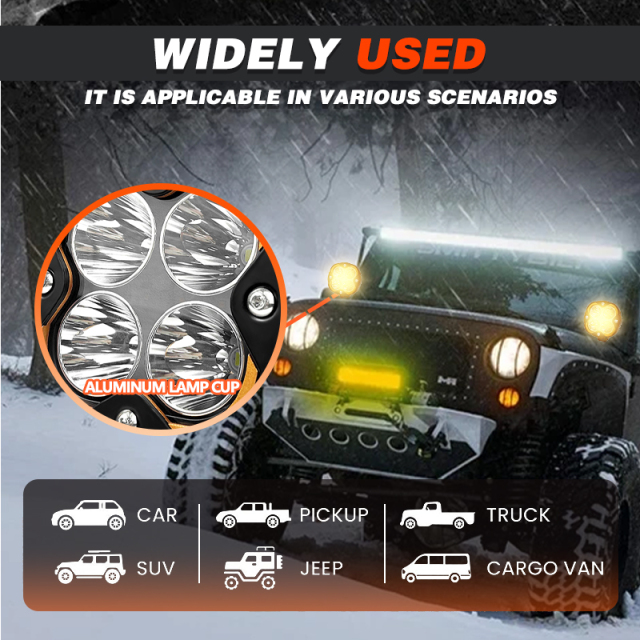
- Pickups and heavy trucks — grille or bumper mounts that add reach to factory low beams. A pair is what most people mean when they ask for a led light bar for truck front-end lighting without going to a roof rack.
- 4x4s, SUVs and Jeeps — A-pillar and roof-rack fitments are the classic positions for 4x4 off-road lights, and the compact housing keeps wind noise and bracket load low at speed.
- Cars and crossovers — mounted low in the grille and aimed short, these do the fog-light job on a bumper line where a long bar would look out of place.
- Boats and RIBs — bow rail, hardtop or transom, angled down and out for docking and channel work after dark.
- ATVs, UTVs and side-by-sides — front rack or cage mounts, where sealed off road lights matter more than beam shape because everything gets wet, muddy and shaken.
- Work trucks, vans and trailers — load areas, tailgates and trailer decks, often used as truck driving lights for early starts and late returns rather than for the road ahead.
- Mixed fleets — one part number across pickups, vans, boats and side-by-sides means one set of spares and one fitting method for the whole yard.
- Salt and spray — the alloy housing, polycarbonate lens and stainless bracket are chosen for a wet environment; a fresh-water rinse after a saltwater run keeps the finish and the threads in good order.
- Docking and low-speed work — a flood lens aimed down and out lights the pontoon, the mooring line and the water alongside the hull, which is where most marina damage happens.
- Channel and marker spotting — a spot or combo beam picks out unlit buoys, channel edges and mooring posts on a dark approach.
- Electrical fit — the 12–36 V DC range covers both 12 V and 24 V systems, and the stable current draw is what you want on a panel shared with a VHF set and a chartplotter.
- Mounting height — bow rail or hardtop, above the waterline and angled down. The lamp is sealed, but it should not be sitting under water at rest.
- On a trailer boat — the same units double as led driving lights for ramp work and the tow vehicle, which is one reason boat owners buy a pair rather than a single lamp.
Off-Road Operations in Rugged Terrain
Vibration and impact
A set of 4x4 off-road lights lives on washboard tracks and rock ledges, and the bracket takes the punishment. A stainless mount bolted to a steel bumper or a roof rack absorbs the buzz that a long corrugated track puts through a vehicle, and the sealed housing means the internals are not rattling against grit that found its way in. Water, mud and dust A ford, a bog hole or a day of red dust is where low-cost off road lights fail: water sitting behind the lens, dust packed around the driver until the output drops. The aluminium housing and polycarbonate lens are the parts that keep this one working, and a yellow or amber cover over the lens keeps the beam readable when the dust is still hanging in the air after a convoy passes. Layered lighting at night A single lamp is a start, not a solution. What most expedition builds end up with is a long bar for the far throw plus a pair of compact lamps angled wider for the near and middle ground — the arrangement that lets you pick out a washout at the edge of the track as well as the track itself. Every off road led light bar in a layered set should be aimed for its own patch of ground rather than all four overlapping at the same point. Working around the vehicle Winch recovery, tyre changes and camp set-up all happen after dark. A flood beam tilted wide is what makes them safe, so fit at least one lamp that can be swung outward when the vehicle is stopped instead of leaving every unit aimed straight down the road. The lightweight, compact form installs with standard mounting hardware to reduce labor and fitment complexity. Focused beam patterns improve visibility and reduce eye strain during long night operations, and the low-maintenance electrical design supports sustained uptime.
Beam Patterns and Filter Covers
- One body, three beams — the cover fitted to the lens sets the light type, so a single lamp covers jobs that would otherwise need two or three different units on the shelf.
- Spot — a tight centre beam that reaches furthest down the road. Use it on open gravel, desert tracks and long unlit straights where the light needs to land well ahead of the bumper.
- Flood — a wide, even wash with no hard hotspot. This is the one for slow technical ground, yard work, campsite set-up and docking, where seeing beside the vehicle matters as much as seeing ahead.
- Combo — a hot centre with spill to either side, and the choice most drivers settle on when the same vehicle does highway, trail and site work.
- Black cover — darkens the front of the lamp and shields the lens when the vehicle is parked, so a chrome-free bumper stays chrome-free.
- White cover — the neutral option. The lamp stays usable as led driving lights in clear weather without shifting the colour of the beam.
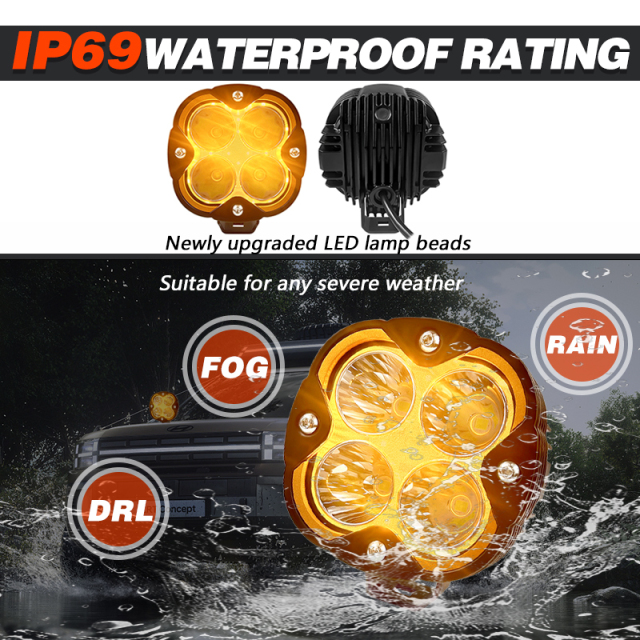
- Yellow cover — cuts glare in fog, heavy rain and snowfall. The yellow tone stops white light bouncing straight back off water droplets and suspended dust.
- Amber cover — the warmer alternative for dust, haze and night work areas, and easier on the eye over a long shift.
- Carry two — most operators keep a yellow or amber cover within reach and swap it on when the weather turns; changing the cover is the fastest way to change the light.
Specifications
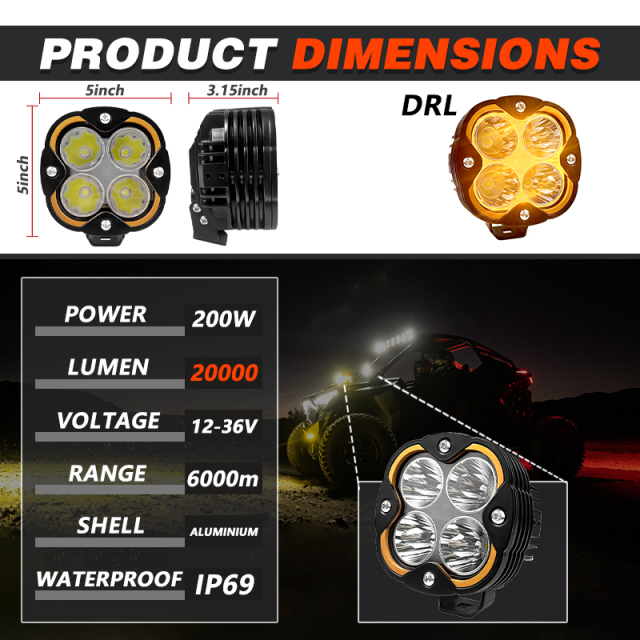
| Power | 200 W |
| Luminous flux | 20,000 lm |
| LED | 3570 chips |
| Voltage | 12–36 V DC |
| Waterproof rating | IP68 |
| Housing | Aluminium alloy |
| Lens | Polycarbonate |
| Bracket and fasteners | Stainless steel |
| Operating temperature | −40 °C to 120 °C |
| Beam options | Spot, flood, combo |
| Filter covers | Black, white, yellow, amber |
| Face diameter | 5 in |
| Housing depth | 3.15 in |
| Rated life | 50,000 hours |
Ordering, Customization and Delivery
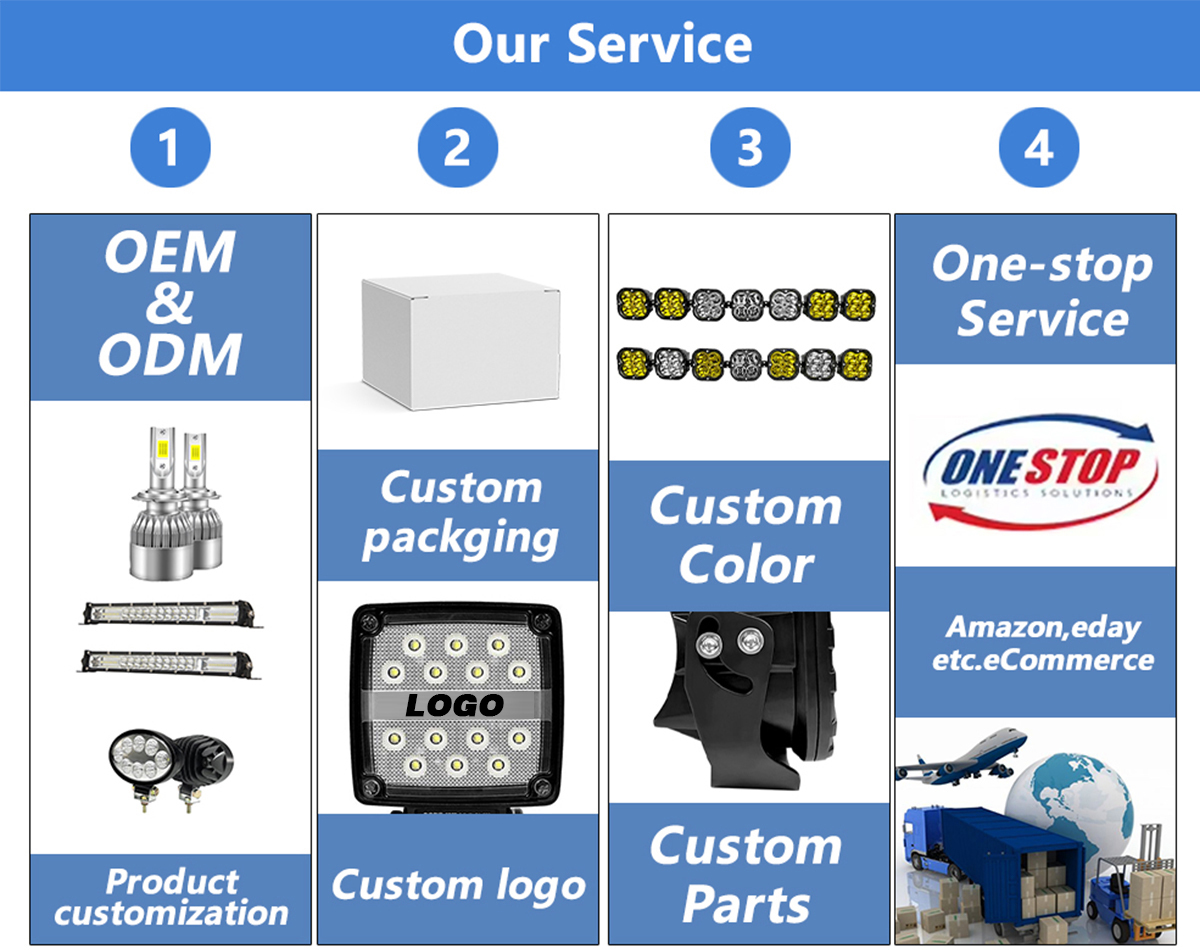
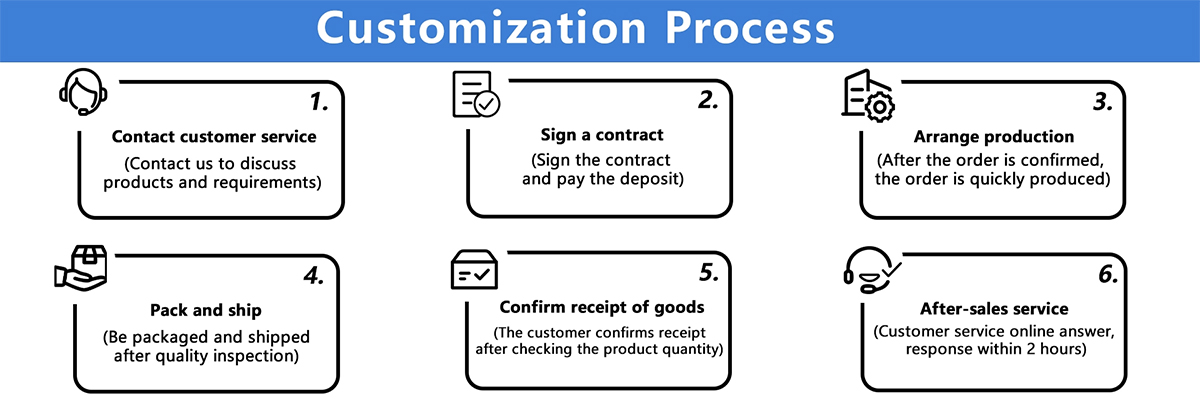
- Custom specifications — sizes, housing colour and logo marking can be built to order for a particular vehicle model or project, so a dealer can put their own line on the shelf instead of reselling a stock item.
- Branded packaging — cartons and packaging can be produced to your artwork; confirm the layout, quantities and any market-specific wording with your sales contact before production starts.
- Shipping speed — we work to 7-day fast shipping on standard orders. Ask your sales contact to confirm the current window against your quantity and destination.
- Samples — ask your sales contact about sample availability and the terms that apply before you commit to a volume order.
- Repeat orders — every batch is built to the same housing, lens and driver specification, so a second order matches the first. That consistency is what most off road led light bar suppliers are judged on, and it is what our inspection looks at before packing.
- Why buy direct — because we are led light bar manufacturers rather than a trading desk, a change of housing colour, logo or packaging goes straight to the line instead of being forwarded to a third party.
- What to send with an enquiry — vehicle or vessel type, system voltage, lens type, cover colours, quantity and any branding requirement. That is enough for our sales team to come back with a specification and a schedule.
Scale & Supply Capability
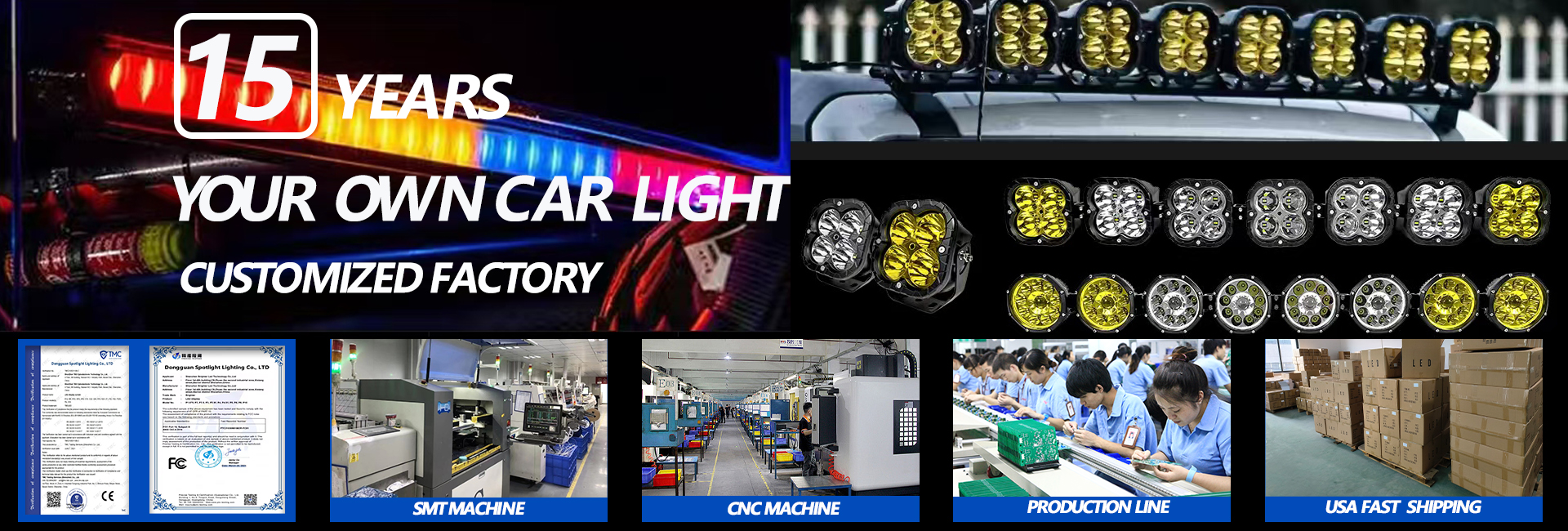
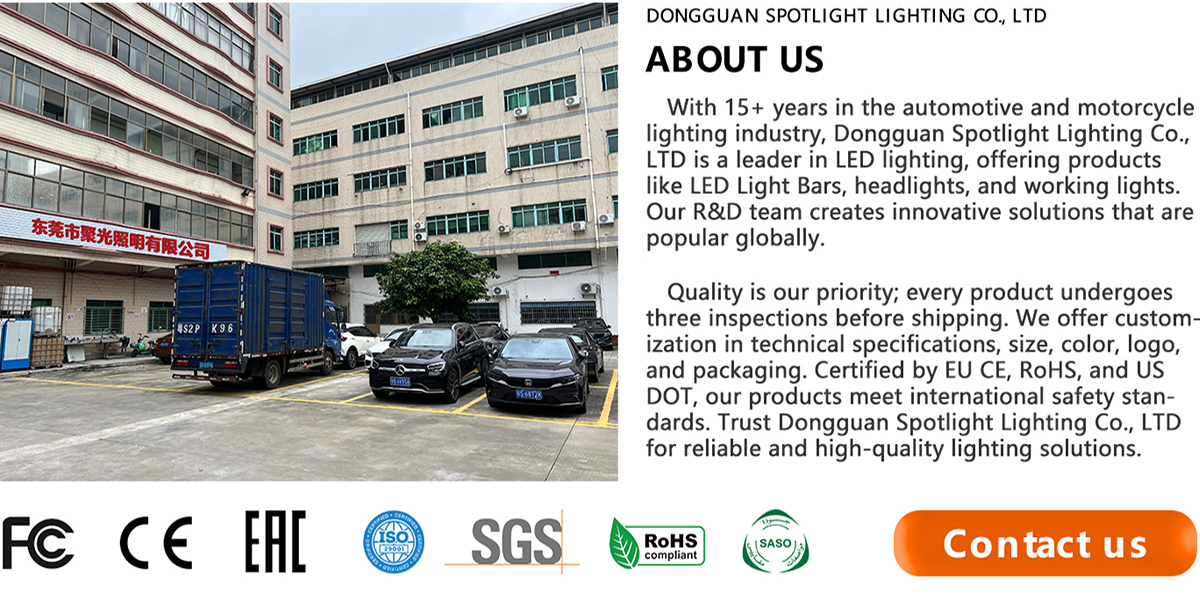
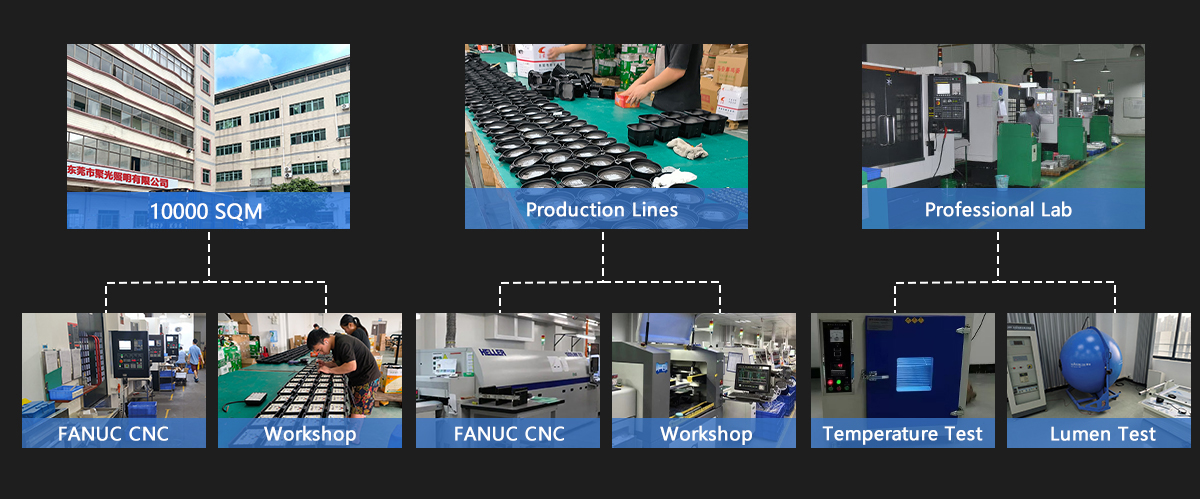
JOPOWER is the brand of our own factory in Dongguan, China, founded in 2010 and run by a team of 20–30 people with 15 years of vehicle lighting production behind them. We add 5–10 new styles every month, hold EU, CE, RoHS and US DOT certification, and put every unit through three full inspections before it leaves us. Because the designs are developed in-house, we can tailor specification, style, size, color, logo and packaging, and items in stock ship in as little as 7 days.
FAQ
What materials are used in these 5-inch lights?
Every off road led light bar unit we build starts with an aluminium alloy housing, which is there for heat rather than looks, and a polycarbonate lens that resists impact. The bracket and its fasteners are stainless steel so they stay free of rust, and the internal joints are sealed to the IP68 rating. There is no plastic housing or plated-steel bracket anywhere in the assembly.
Can you build them to suit a particular vehicle or project?
Yes. We take on custom work covering sizes, housing colour and logo marking, and we can build a set around a specific vehicle model or a project's requirements. Tell us the vehicle, the voltage, the lens type you want and the branding you need, and we will come back with what can be changed and what should stay standard. Dealers building their own 4x4 off-road lights range usually start with a colour and logo change and extend the specification from there.
How difficult is installation?
It is a bracket-and-two-wires job with standard tools. The lamp bolts to a flat surface, tilts on its bracket before you tighten it, and takes a fused feed through a relay. The part that needs care is sealing the mounting holes properly. On a truck the lamp usually goes on the bumper or in the grille, which is the same place you would mount any led light bar for truck set-up, and it needs no body cutting on most mounts.
Are these legal to use on the road?
Treat them as auxiliary lighting rather than a replacement for your headlights, and check the rules where you drive before using them in traffic. Most of our customers use them as led driving lights on unlit roads, trails and water, where the extra reach and width are the whole point. On-road use of auxiliary lamps varies by country and by state, so wire them to a separate switch and use them where local rules allow.
Can I add them to an existing switch panel or lighting circuit?
Yes. The lamp runs on a 12–36 V DC feed, so it can share a fused circuit and an auto switch panel with your other lights, provided that circuit can carry the total load. At 200 W it should have its own relay, with the switch only triggering it. If you are adding a pair to a truck driving lights circuit that already runs a bar, add up the total draw first.
Is one lamp enough, or should I fit a pair?
A pair is the better starting point. Two lamps aimed slightly apart cover more ground than one lamp turned up to do the same job, and the near-side lamp catches the edge of the track that a single centre-mounted light misses. A common arrangement for off road lights is a pair of these angled wide plus a longer bar for distance, with each unit aimed at its own patch of ground.