Product Overview
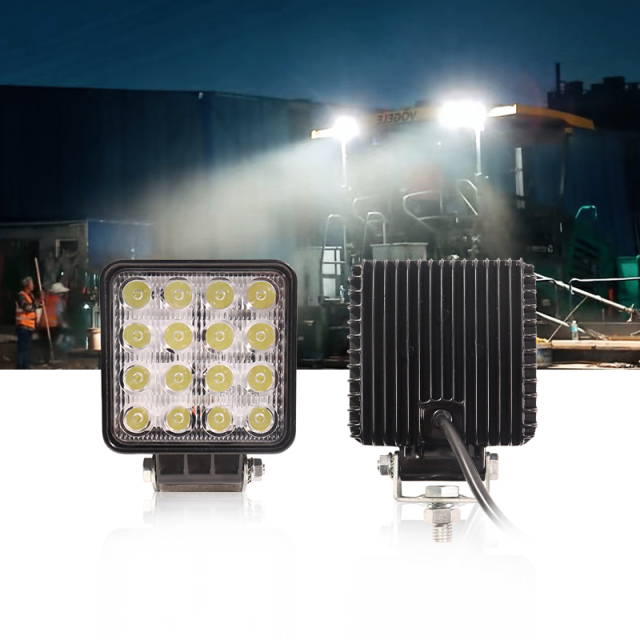
It is an auxiliary lamp rather than a headlight: something you fit to fill in the dark edges the factory lights leave behind, whether that is the shoulder of an unlit trail, the corner of a yard, or the space behind a trailer. The square body is the practical part. A flat-backed pod sits tight against flat brackets, pairs neatly side by side, and reaches mounting points where a long bar would foul the grille, the winch or the bonnet line. Shops like it for the same reason: one small box covers a lot of different vehicles and is easy to explain across the counter. What it replaces is usually one of two things — a halogen or early LED pod that has fogged, cracked or gone dim, or an oversized bar that never really suited the vehicle. Buyers moving up from entry-level pods notice the housing first: cast metal instead of plastic, a proper lens and a bracket that stays where you set it. Buyers moving down from a bar get something far less intrusive on the front of the car that still lets them aim each lamp where it is needed. From there a second pair on the roof or the rear is a natural step, and because each unit is independent, every pair can be aimed and switched on its own. Our LED offroad lights go to accessory shops, repair workshops, resellers and fleet buyers, and this model is one of the easier off road lights to keep in stock: it suits so many vehicles that it rarely sits on the shelf.
Beam & Light Output
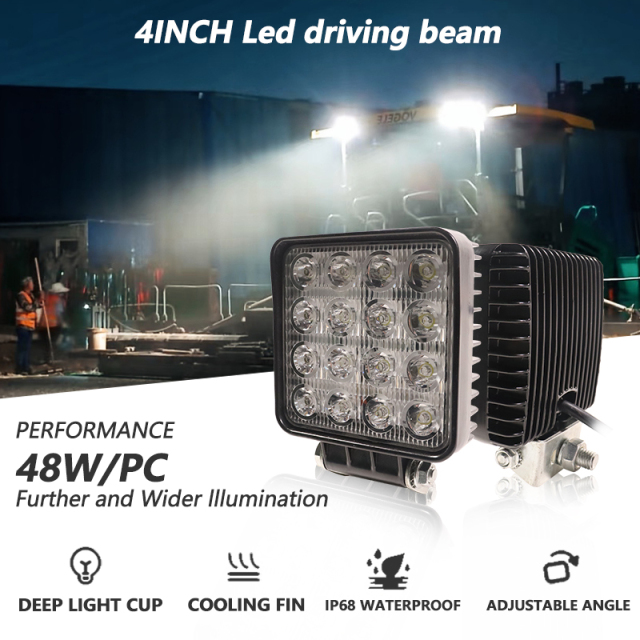
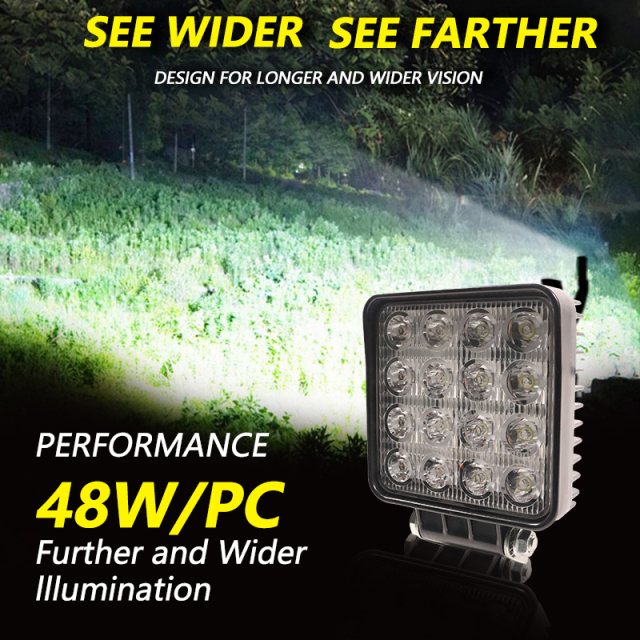
Output on a pod this size comes down to two things: how the reflector shapes the beam, and how much of that beam reaches the road. The reflector here is a deep cup rather than a shallow dish, so light is gathered and pushed forward instead of scattering inside the housing. What you get in practice is a beam with a defined centre and enough spill at the edges to pick up the shoulder, marker posts, verges and debris before they are under the wheels.
The colour is a clean white that keeps contrast on gravel, wet tarmac and grass. That matters more at night than a raw brightness figure, because a flat wash of light flattens the ground in front of you while a tighter, cleaner beam lets the driver read the surface.
Two 4x4 off-road lights aimed slightly apart give the widest useful result. Set them so the beams overlap in the centre and fan outward, and the combined pattern covers the lane ahead and the ground either side of it. A single lamp is enough for reversing or yard work; a pair is the normal arrangement for night driving.
If you are weighing this against a long off road LED light bar, the difference is in the shape of the light, not just the chip count. A bar lays one continuous band across the front of the vehicle. A pair of pods gives two concentrated beams that can be aimed independently, which is often more useful on a narrow trail, or on a crowded bumper where a bar simply will not fit.
Because these are LED driving lights rather than a decorative accessory, keeping the lens clean is part of the performance. A film of dust or dried mud will cost more output than any difference between one chip and another, so wipe the lens as part of the vehicle's normal wash.
Housing, Cooling & Sealing
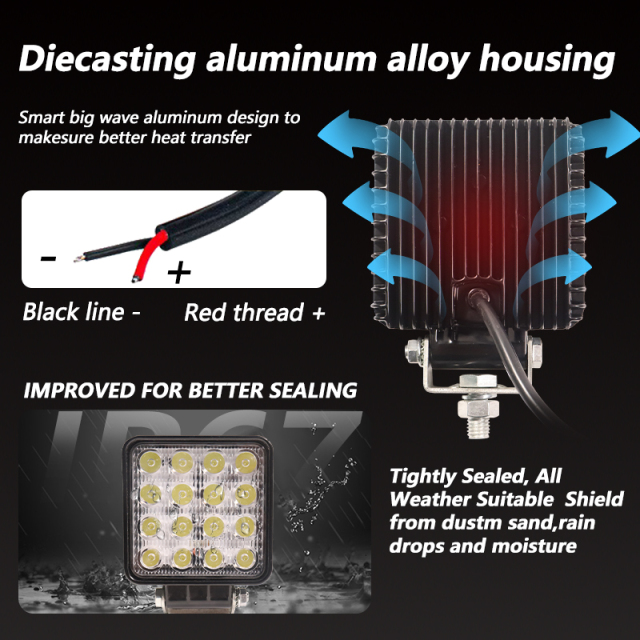
- Cast, not pressed. The housing is die-cast aluminium alloy — the detail that separates these LED offroad lights from plastic-backed pods sitting at a similar price. It gives the board a rigid metal body to sit in and lets the case work as the heat sink.
- A big-wave fin pattern on the back. The fins are shaped to move heat away from the board and into the air, and the ribbed sides add surface area without adding bulk. Steady temperature is what keeps output even through a long night run.
- Sealed against the weather. The lens joint and the lead exit are sealed so dust, sand, rain and moisture stay outside the housing. That is what prevents the fogging that ruins a low-cost pod in its first wet season.
- Built to be knocked about. Shock, vibration and corrosion resistance matter on washboard tracks, farm implements and coastal air, where salt settles on metal overnight.
- Fewer joints than a bar. A single cast pod has one lens seal and one lead exit; a long off road LED light bar has several. Fewer places to leak is a genuine advantage when a lamp spends its life in rain and dust.
- A finish that suits a working vehicle. The textured matte black housing and metallic bracket do not scratch down to bright metal the first time they meet a branch.
- Wiring you can see and check. The red and black leads come fitted and sealed at the housing, so there is no separate connector to corrode or lose between the box and the vehicle.
Wide Voltage Fitment
- One box, both voltages. The lamp runs on a 9-80 V DC input, so the same part serves a 12 V Wrangler and a 24 V truck or tractor. Shops that look after both no longer need two versions of the same pod taking up shelf space.
- Higher-voltage equipment is covered too. Machines and plant running larger battery systems sit inside the same range, which means one lamp can be specified across a mixed yard. Confirm the highest system voltage on the machine before you commit a full carton to it.
- Charging voltage is not the same as nominal voltage. A 24 V vehicle sits well above 24 V while the engine is running, and this input range is wide enough that it makes no difference at the lamp.
- Mixed fleets get simpler. One spare on the service van covers every vehicle on site, and a driver who moves from a 12 V pickup to a 24 V truck keeps the same lights and the same bracket.
- Counter staff do not need a lookup chart. Fleet and workshop buyers fitting 4x4 off-road lights across a mixed fleet get the most out of this: one lamp, one bracket, one set of fitting instructions, whatever the machine.
- Buyers who source pods and bars from several off road LED light bar suppliers often keep two versions of a lamp purely to cover both voltages; this model removes that duplication and the dead stock that comes with it.
- Stocking gets cheaper. Fewer products, fewer slow-moving lines, and less capital tied up in a duplicate that only exists because of voltage.
- Decide by mounting point, not by looks. Walk the vehicle before the order is placed: a flat, drilled bracket takes the square pod, while a circular recess, a fog-light hole or a tube clamp takes the round one. The shape is what decides whether a lamp fits at all.
- The square 4-inch pod suits flat surfaces. A-pillars, roof-rack crossbars, bumper plates, tray fronts and the space either side of a winch all work, because the flat back sits flush and two lamps can be mounted close together without fouling each other.
- The round 4-inch lamp suits circular apertures. Factory fog positions, round cut-outs, bullbar hoops and tube clamps take a round body naturally, and it rotates inside its clamp so the beam can be turned without drilling a second hole.
- The two shapes do different jobs with the light. This square model is built around a driving beam, with a deep reflector cup that pushes light down the road, while the round 4-inch is a flood/fog lamp that fills the ground close to the vehicle. Carrying both lets you answer a customer who wants to see further and one who wants the verge picked out in bad weather.
- Voltage narrows the choice on mixed fleets. This square pod runs on a 9-80 V DC input, so one part covers 12 V and 24 V vehicles as well as higher-voltage plant; the round 4-inch is a 12-24 V lamp. If your trade includes 24 V trucks, tractors or site equipment, lean on the square.
- Build the opening order around the local vehicle mix. A Jeep, 4x4 and pickup customer base supports more square pods on bumpers, A-pillars and roof racks, while a workshop that services vans and light commercials tends to move round lamps into fog positions. Order both shapes, but let the vehicles in your area set the ratio rather than splitting the budget down the middle.
- Keep one or two shapes, not five. A square and a round at the 4-inch size cover most fitments; adding near-identical wattages of the same shape is what leaves dead stock on the shelf. Depth and bracket clearance matter more than a step up in power.
- Order branding once for the range. If you want custom off road lights carrying your logo, colour and packaging, the same specification can be applied to whichever shape you standardise on, so the square and the round go into your catalogue as one line rather than two unrelated products.
- Send us a photo of the mounting position and the vehicle, and we will confirm which shape and bracket to put on the first order.
Mounting & Installation
- Check the box before anyone picks up a drill: the lamp, its pivoting bracket, the bolt and nut for the pivot, and the pre-fitted red and black leads. Nothing else is needed for a standard fit.
- Choose the position and check clearance. Bumper corners, bullbars, A-pillars, hood edges, roof racks and rear bumpers all work; most 4x4 off-road lights end up on the front two. Swing the bracket through its full arc before committing to a hole, because the lamp needs room to tilt without touching bodywork.
- Fix the bracket to a flat, rigid surface. On plastic bumpers, thin panels or roof-rack crossbars, fit a backing plate behind the mounting point so the load is spread and the panel does not crack.
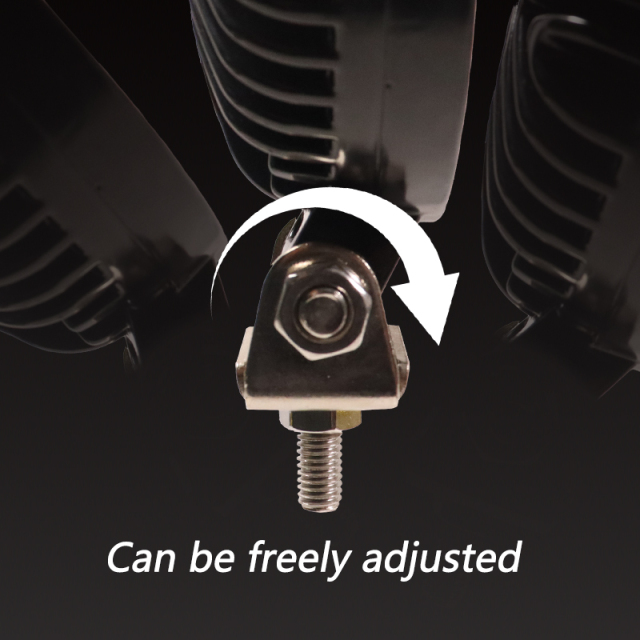
- Hang the lamp, set the angle on the pivot bolt and tighten. Leave enough friction that the lamp can still be nudged by hand for fine adjustment, but not so loose that it drops on rough ground.
- Connect the wiring. Red goes to positive and black to negative. Run the circuit through a fuse and a switch — a dash switch, a relay or an off road light switch panel. Keep the leads clear of sharp edges and hot surfaces, and leave a small drip loop before the lamp.
- Aim at night. Park facing a wall or a quiet stretch of road, set the two LED driving lights so their beams overlap in the middle and spread out at the edges, then lock the bolts.
- Re-check after the first few trips. Rough ground settles new brackets, so a quick torque check and a look at the lead routing now saves a loose lamp later.
Applications
Jeeps and 4x4s. The classic fit: a pair on the bumper or A-pillar for night trails, rock crawling and desert runs where factory lighting runs out of reach. The compact body keeps the grille and the winch clear, and the beams can be set low for technical ground or long for open track.
Pickups and trucks. Bed work, trailer hook-ups and reversing into a dark yard — mounted at the rear, two pods light the area behind the vehicle far better than a single reverse lamp. On the front they add reach on unlit rural roads.
ATVs, UTVs and side-by-sides. One pair on the front bar of a quad or the cage of a side-by-side turns a dark trail into a usable one, and the small housing does not clutter a narrow front end.
Boats and trailers. Deck work, ramp approaches and launch points after sunset. The sealed body and corrosion-resistant housing suit a saltwater environment, and the lamps can be aimed down at the deck rather than out at the water.
Yards, farms and sites. Tractor implements, loaders, gates, fuel points and workshops — anywhere a fixed working light has to survive dust, rain and vibration. On a build that already carries an off road LED light bar, one or two of these fill the corners the bar misses.
Around the property. Backyard, garden, driveway and shed lighting, plus a backup light for the months when the evenings close in early.
Trade use. Shops sell them across the counter as a simple upgrade, workshops fit them as part of a lighting package alongside bars and LED driving lights, and resellers brand them as part of their own range. Because the same lamp suits so many vehicles, it is one of the easier off road lights to keep moving.
Specifications
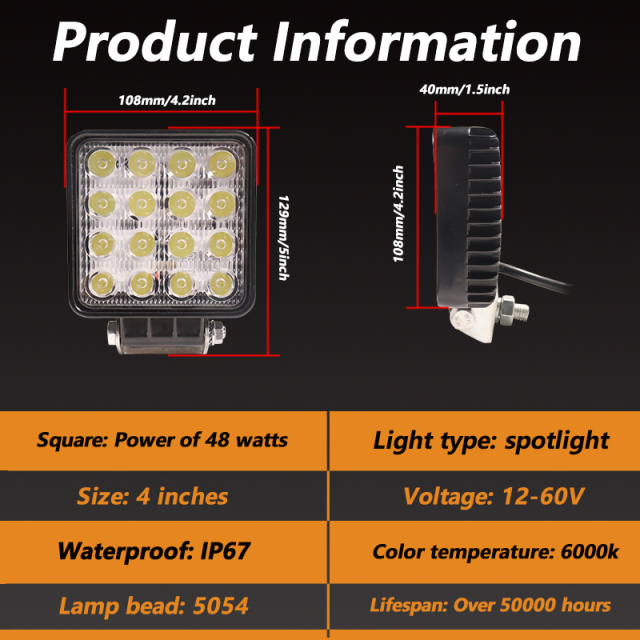
| Power | 48 W |
| Size | 4 inch, square housing |
| Input voltage | 9-80 V DC |
| LED chips | 3030 |
| Colour temperature | 6000 K |
| Beam | Deep reflector cup, driving beam |
| Housing | Die-cast aluminium alloy |
| Lens | Clear, high light transmission |
| Waterproof rating | IP68 |
| Rated lifespan | 50,000 hours |
| Wiring | Pre-fitted red (+) and black (−) leads |
| Mounting | Pivoting bracket with bolt and nut |
Ordering & Delivery
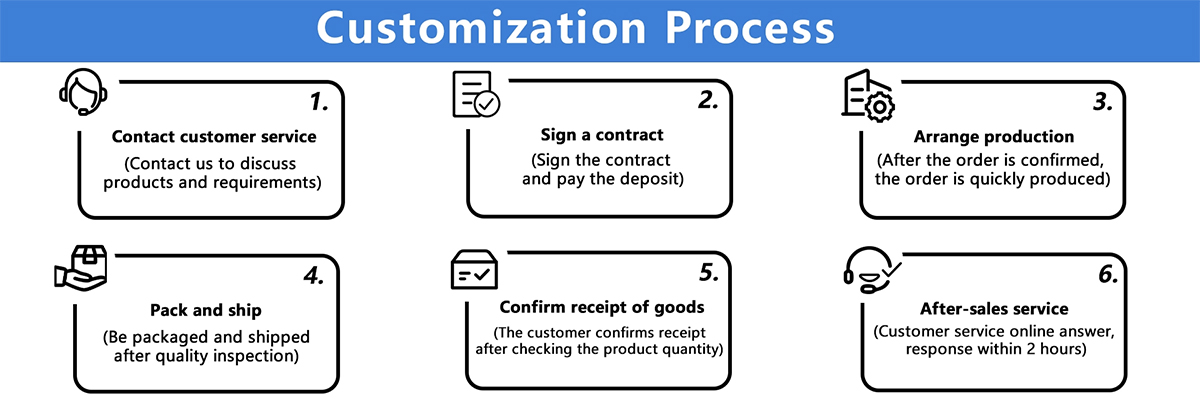
- Tell us what you need: model, quantity, and whether you want single lamps or matched pairs. On a first order, say which vehicles the lamps are going on and we will confirm the fitment.
- Confirm branding and packaging. We build custom off road lights to your specification, and logo, colour and packaging details are quoted per order rather than picked off a shelf.
- Agree the dispatch date. Stock items move on our 7-day fast shipping schedule; larger or branded orders are scheduled once the order is confirmed, so ask for the current lead time before you promise a date to your own customer.
- Add the companion items. Brackets, spare hardware and an off road light switch panel can travel in the same consignment, which saves installers a second delivery.
- Check the printed figures. If your catalogue or carton artwork carries voltage and IP ratings, compare them against the units on arrival before you reprint; our sales contact will confirm the exact markings for your batch.
- Put the commercial terms in writing with your sales contact before production — payment, documents and how a defect is handled.
- Inspect on arrival. Open a carton and check lenses and housings before signing where you can, and photograph any transit damage straight away; it is far easier to resolve with the carrier that way.
- Whether you are comparing off road LED light bar suppliers for the first time or adding to an existing range, send your requirement through the contact form, email Szvictory2005@163.com, or reach Paul on WhatsApp at +86 15362436281.
Scale & Supply Capability
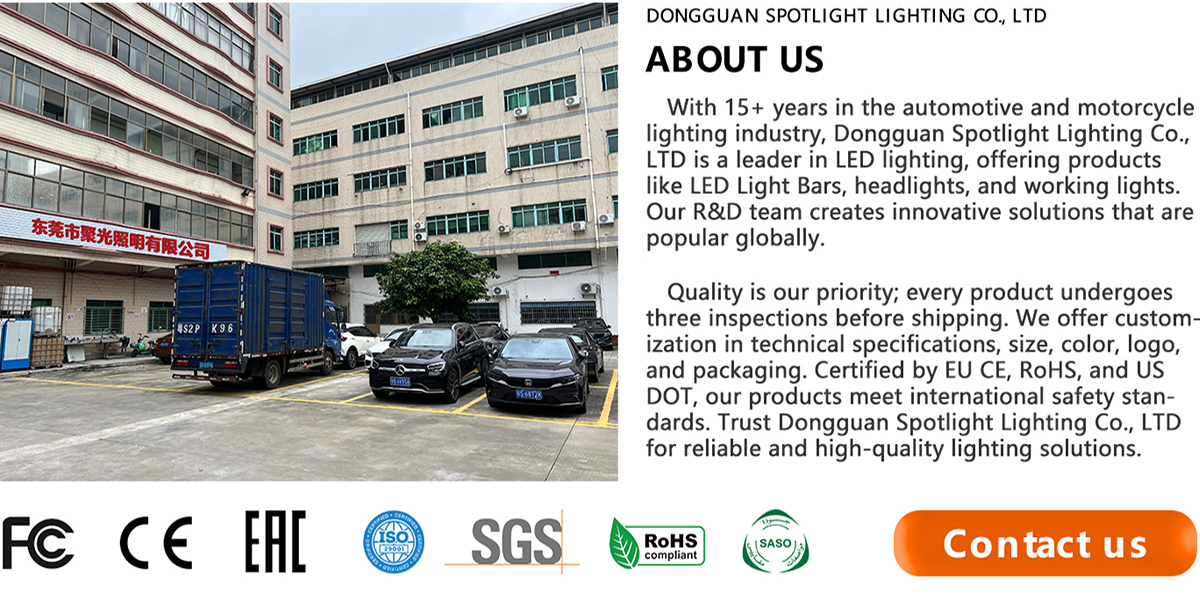
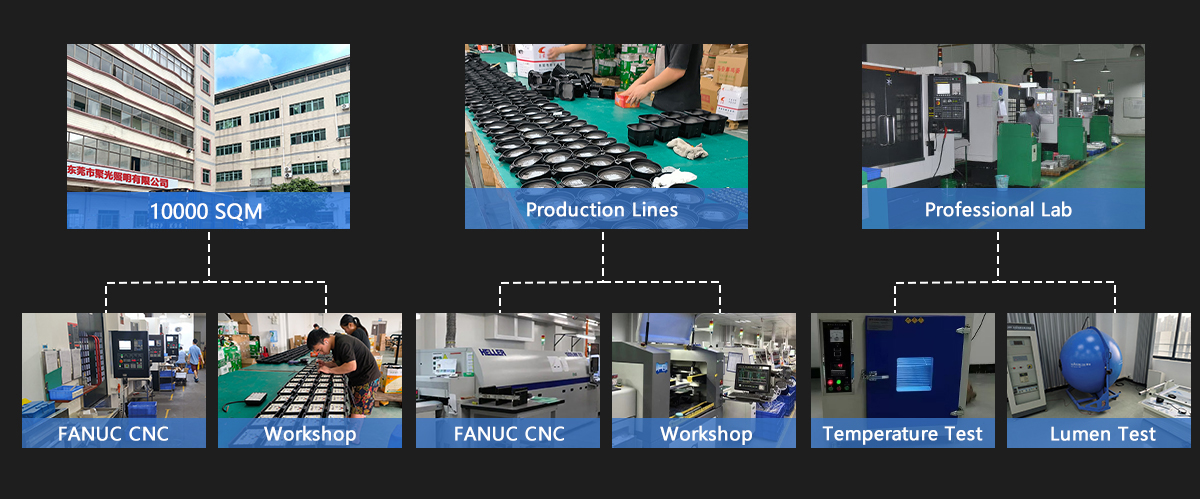
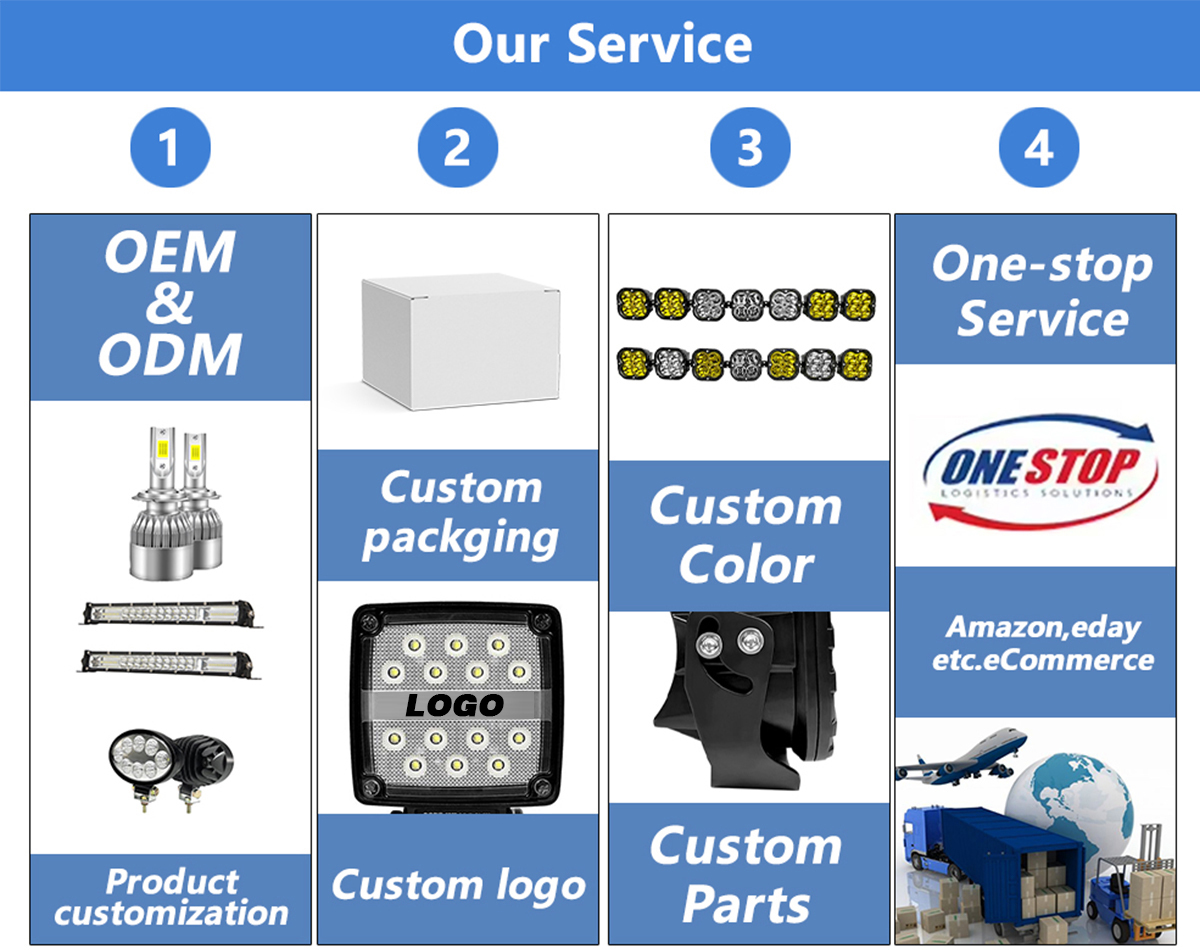
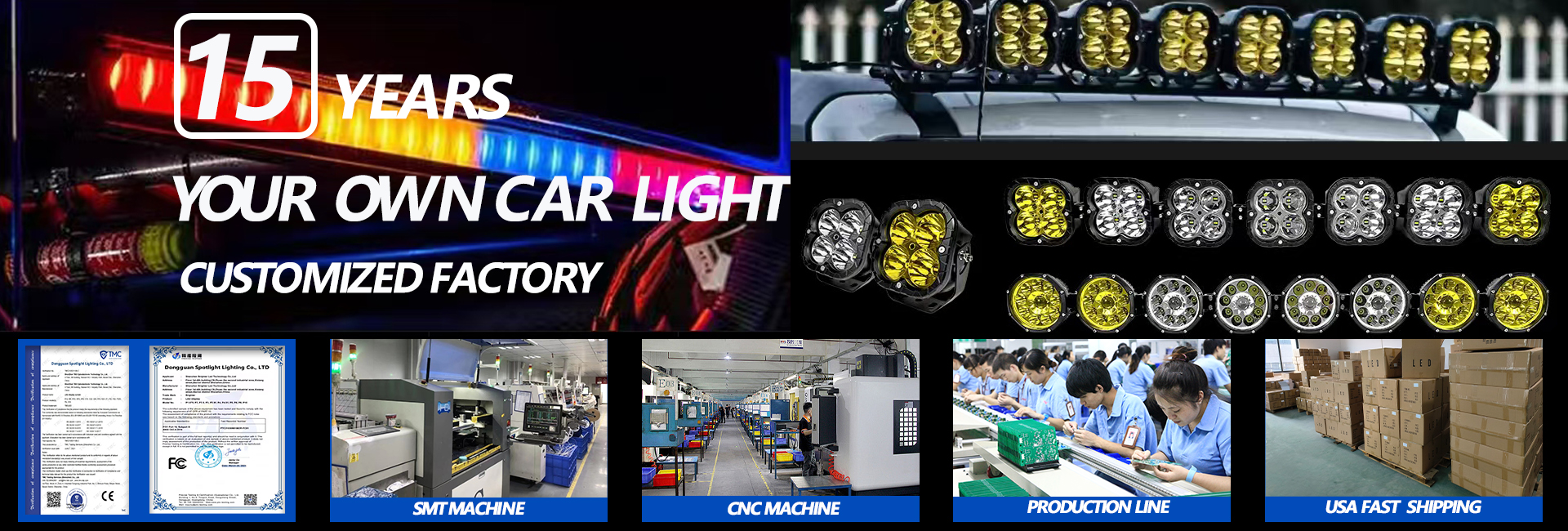
JOPOWER is the brand of our own factory in Dongguan, China, founded in 2010 and run by a team of 20–30 people with 15 years of vehicle lighting production behind them. We add 5–10 new styles every month, hold EU, CE, RoHS and US DOT certification, and put every unit through three full inspections before it leaves us. Because the designs are developed in-house, we can tailor specification, style, size, color, logo and packaging, and items in stock ship in as little as 7 days.
FAQ
How many lamps do I need to light a trail at night?
A pair on the front is the usual starting point — one each side of the bumper or A-pillar, aimed so the beams overlap in the centre and fan out at the edges. That covers the lane and both verges. A second pair on the roof or the front of a rack adds depth for fast open track, and a rear pair is worth having if you reverse in the dark or work behind the vehicle. Switch each pair separately, either on its own dash switch or on a channel of an off road light switch panel, so the front pair can run without the roof lighting up. If you are comparing two pods with an off road LED light bar, remember the bar lays down one continuous band while pods give you two aimable beams.
Can I run it straight off a 24 V truck without a converter?
Yes. The 9-80 V input takes a 24 V feed directly, so nothing has to sit between the vehicle's wiring and the lamp. What still needs attention is the circuit itself: match polarity (red to positive, black to negative), protect the feed with a fuse, and check that the switch or relay already on the machine is rated for the load you are adding. If several lamps are going onto one vehicle, plan the switching before anyone drills, because it is much easier to run the control wiring once.
How do I clean it without forcing water past the seals?
Wipe the lens with a soft cloth and mild soapy water, then rinse with a gentle flow rather than a jet. Keep a pressure washer away from the lens edge and the point where the leads leave the housing — that is where water gets pushed past a seal on any lamp, however well it is built. After a run through mud or sand, check that the lens joint is clear of grit, and have a look at the seal area whenever the vehicle has taken a knock to the bumper.
Can I use it as a headlight on the road?
No — this is an auxiliary lamp, not a replacement headlight. Rules on auxiliary lighting, mounting height and when off road lights may be used on a public road differ from country to country and often from state to state, so check what applies where the vehicle is registered before fitting. Most of these lamps go onto vehicles used off-highway, on private land, on site or in competition, and many owners also use them for yard, trailer and reversing work.
Square or round 4-inch — which one should I stock?
Choose by mounting point rather than by looks. Our 4-inch round pod suits circular apertures, fog-light recesses and bullbar hoops; this square version suits flat brackets, A-pillars, roof racks and anywhere you want two lamps sitting tight together. Shops that buy from several off road LED light bar suppliers usually end up carrying both shapes, because the mounting points vary so much between vehicles. If you want custom off road lights carrying your own branding, tell us which shape you are standardising on and we will quote the specification, colour, logo and packaging together.
How long do LED offroad lights like this last?
The rated figure for this lamp is on the specification table, but what decides real service life is heat and sealing. Mount the lamp where air can move across the fins, and avoid tucking it behind a plate, a cover or a winch cradle where heat has nowhere to go. Keep mud and dried grass out of the fins for the same reason. Sealing matters just as much: a lamp that takes in moisture corrodes internally and dims long before its rated hours, which is why the lens joint and the lead exit on this model are sealed at the housing.