Product Overview
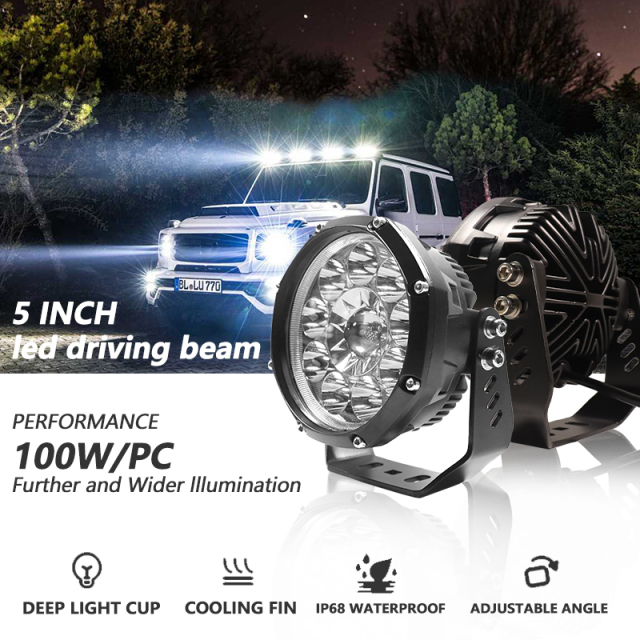
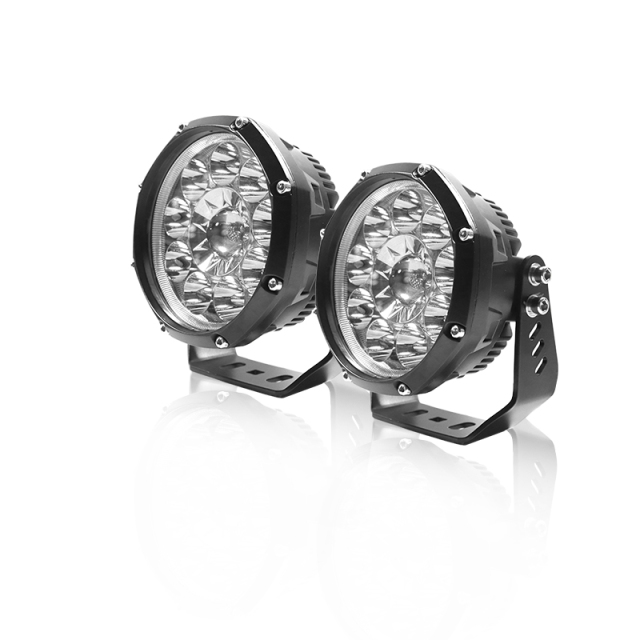
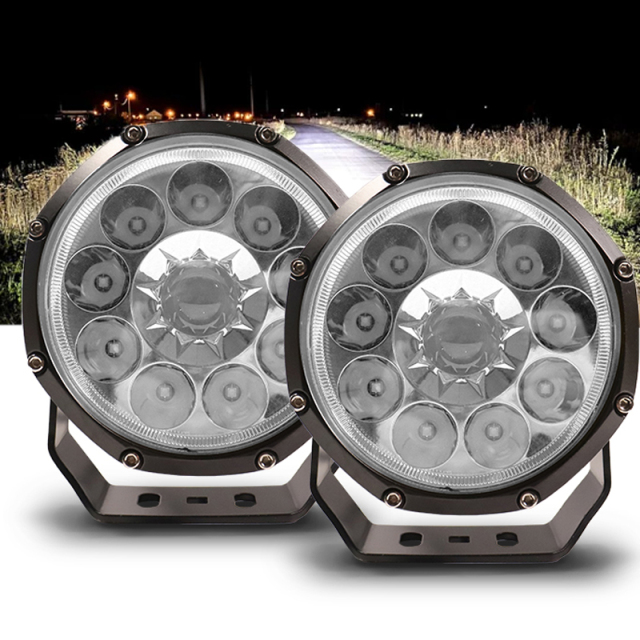
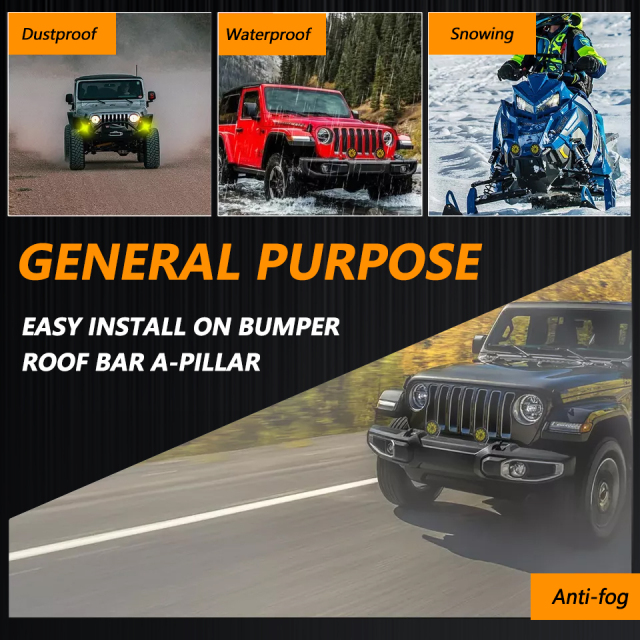
A round lamp that mounts where a bar will not fit and puts a tight white hot spot exactly where the driver is looking — that is the whole idea behind this 6000 lm work light. The 3030 high-intensity chips sit behind a deep faceted reflector, the body is die-cast aluminium, and the assembly is sealed to IP67, so dust, rain and a wash-down at the end of a shift do not end its evening. Plenty of led light bar manufacturers treat the paperwork as an afterthought; this is built as a documented lamp, and the documents that clear an inspection can travel with it — usually the difference between a light that stays on the vehicle and one that has to come off again. The round pod format suits bumpers, bull bars, A-pillars, headache racks and rear work positions on pickups, 4x4s, UTVs, ATVs, trucks and motorcycles. Shops buying off road lights for a mixed customer base like it because one bracket and one housing cover a lot of vehicles — the installer sets the angle, and the parts counter does not have to stock five different brackets. This is the pod: the piece that sits beside an offroad led light bar in a customer's build rather than replacing it, doing the tight corner, the rear loading point and the A-pillar work that a bar cannot reach. It goes onto the vehicle as one unit — no assembly, no separate gaskets to lose.
Spot Beam Performance
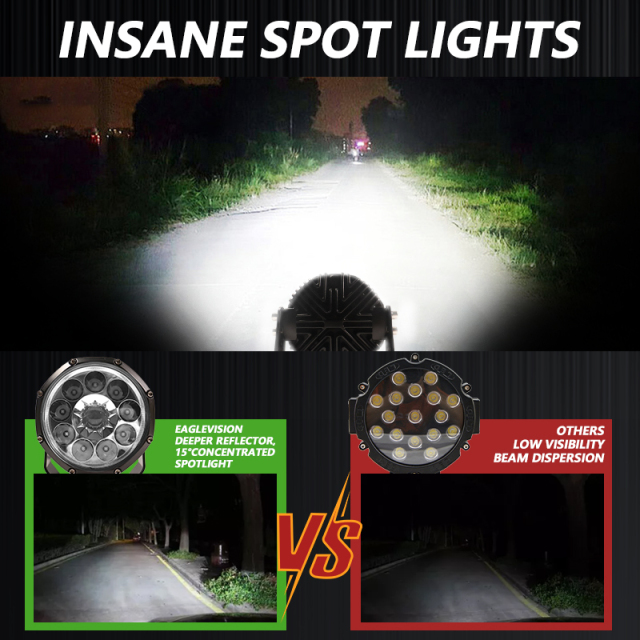
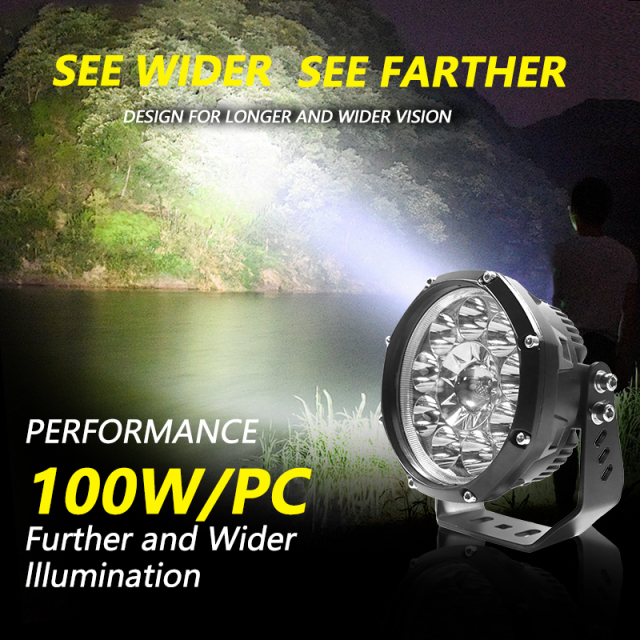
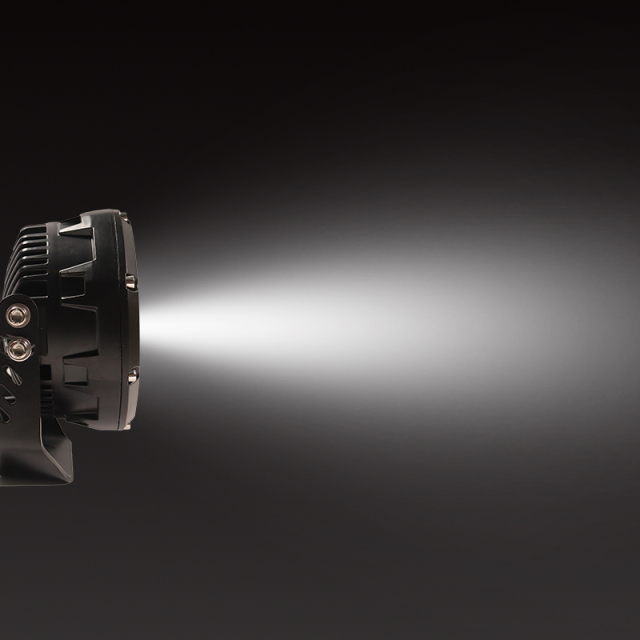
The 3030 high-intensity chips are paired with a deep multi-facet reflector that gathers the output into a dense core with just enough spill to read the verge, so the led driving light shows the shape of the track ahead instead of a sheet of glare across the bonnet. The spot is laser-assisted. In practice the centre of the beam stays tight further out, and the cool white colour keeps it penetrating in fog, rain and snow — exactly the conditions where an unfocused lamp turns into a white wall in front of the vehicle. A lot of led light bar manufacturers publish a lumen figure and stop there. What decides whether that figure is useful is how much of it lands in the hot spot, and that comes down to the reflector, the chip bin and how tightly the two are matched. This lamp is designed as a spot from the start rather than a flood with a narrow cover over it. Two units give the most flexible result: set one slightly wider for the near verge and one long for the distance. Drive it and adjust once — angles shift more than people expect once the vehicle is loaded.
Body, Cooling & Sealing
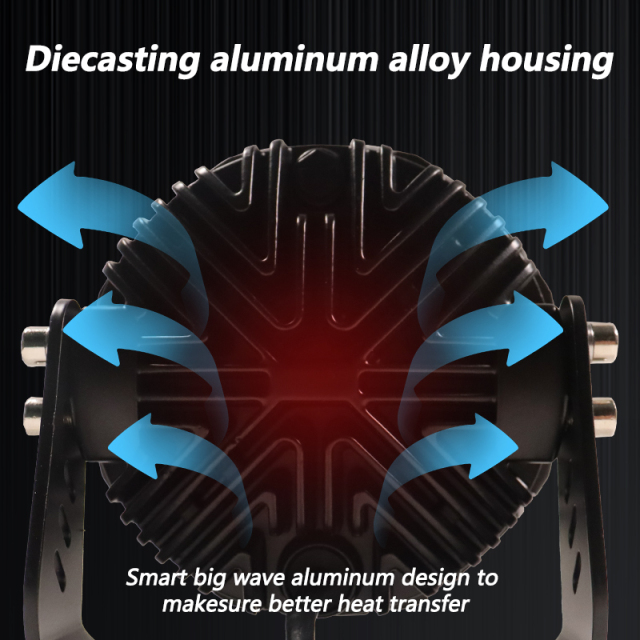
- Die-cast aluminium alloy housing. The body is the heat path as well as the structure — it pulls warmth off the chips and holds the bracket alignment on corrugated ground, where a pressed steel shell slowly lets the aim drift.
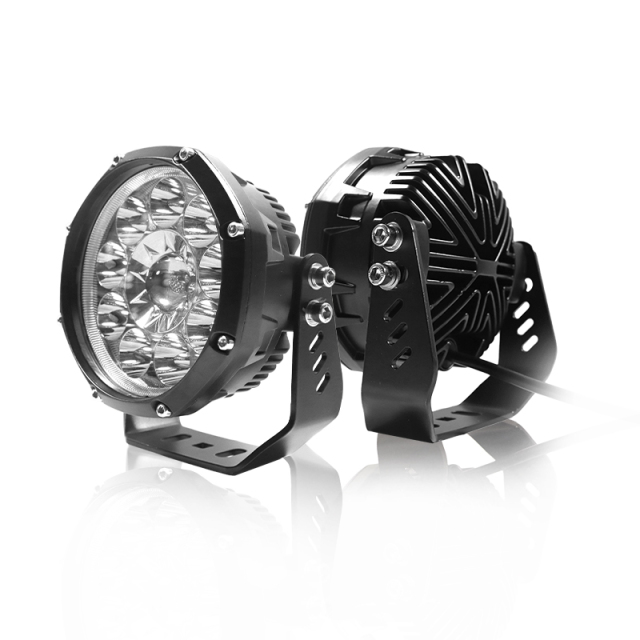
- Big-wave cooling fins across the back. Surface area is what keeps a 6,000 lm lamp at full output instead of fading after twenty minutes, and it is where a lot of led light bar manufacturers take metal out and hope nobody notices.
- Regulated driver circuitry. Current is controlled rather than dumped straight into the chips, which limits heat build-up and is what the long service life rests on.
- Sealed housing behind a shock-proof PC lens. Dust-tight and protected against temporary immersion, so rain, snow, mud and a jet of water at the end of the day are not the end of it. Polycarbonate also takes stone strikes that would star a glass lens.
- Fast on/off response with vibration resistance. No warm-up and no filament to shake loose, and the bracket stays put on the washboard tracks and rough site roads where led driving lights for trucks spend most of their working life.
- No UV or IR in the beam. The light will not yellow the plastics around it or a cover left on the lamp, and it draws far less current than the halogen unit it usually replaces.
- Anti-corrosion finish. Built for brine, coastal air and road salt — the conditions off road lights on a winter service vehicle actually see — where an untreated housing starts to bloom within a season.
- Snap-on covers in black, white, yellow and amber. The cover changes the look of the front end and gives an amber or yellow tone for dust, snow and grit; other colours can be customised.
Fitting & Aiming
- Choose the position. Bumper, bull bar, A-pillar, roof rack or a rear work point — anywhere the U-bracket can sit flat against something solid with clear air in front of the lamp. On a bull bar this is the usual answer for 4x4 off-road lights.
- Bolt the bracket down first. Fix the U-bracket to the vehicle with the pivot bolt left finger-tight, so the lamp can still be swung by hand.
- Aim before you tighten. Park about 5 to 7 m from a wall, mark the height of the led driving light on it, and set the hot spot just below that line so the beam lands on the road rather than in oncoming glass.
- Run the wiring through a relay and a fuse on a switched circuit. The lamp itself is plug and play; check that the plug on your vehicle's wiring matches the one on the lamp before you cut anything.
- Tighten and test. Torque the pivot bolt, pull on the bracket to confirm it is solid, and let the lamp run for a few minutes while you look at the aim again.
- Re-check after the first trip. New mounts settle; a five-minute check after a rough run saves a re-aim later.
Typical Applications
- Pickup and 4x4 night driving. A pair on the bull bar or bumper turns an unlit farm road into something you can read at speed, and the round body keeps the front end looking factory rather than bolted together. This is the fitment most customers picture when they ask for 4x4 off-road lights.
- Jeep, UTV and ATV trail work. Low mass and a single mounting point suit A-pillars, roll cages and roof racks, where a long bar would catch every branch on the trail.
- Service bodies and work trucks. Mounted at the rear or on the side of a body, it lights a tailgate, a hitch or a load bed without idling the engine for an hour. On led driving lights for trucks, that rear position is often the one that gets used most.
- Farm, yard and utility vehicles. On tractors, side-by-sides and yard trucks these lamps lead a hard life; the sealed housing shrugs off dust and a wash-down, and the aim survives the ruts.
- Motorcycle and adventure-bike auxiliary lighting. One lamp, modest current draw, and a spot that sits above the stock headlight pattern on a dark highway.
- Depot and fleet manoeuvring. Where drivers are spotting trailers and gates in the dark, a wide-mounted pair is easier to live with than a led light bar for trucks that floods the mirrors with light.
Specifications
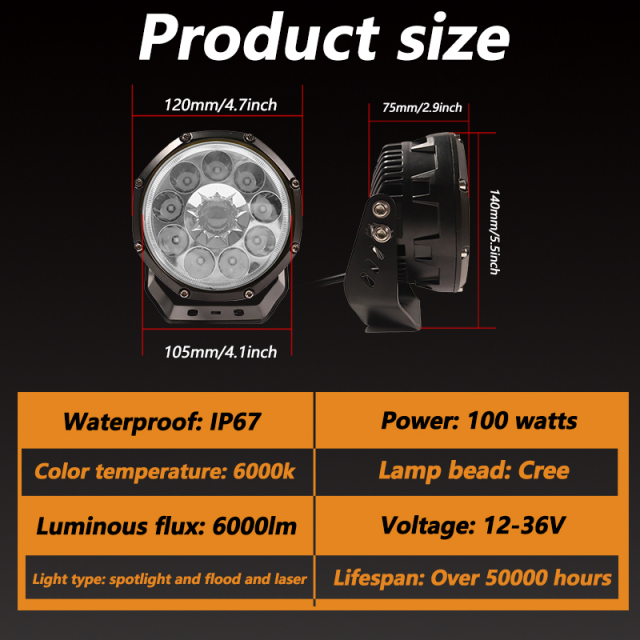
| Brand | JOPOWER |
| Lamp type | Round LED work and driving light, spot beam |
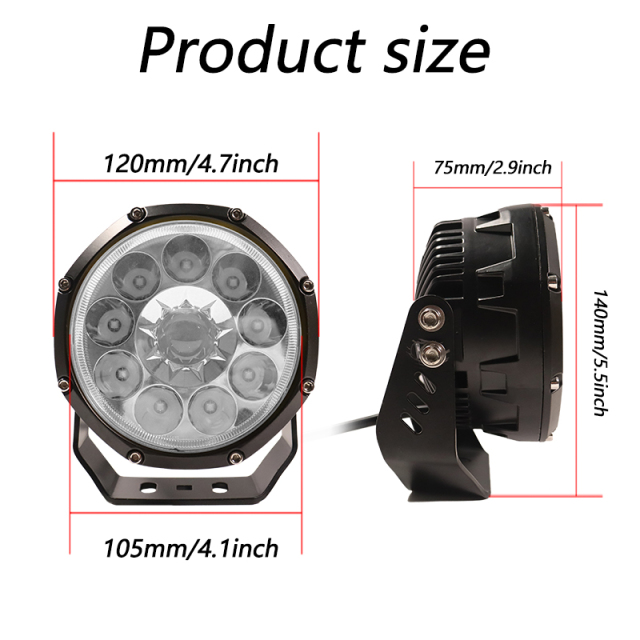
| Diameter | 5 inch |
| Brightness | 6,000 lm |
| Colour temperature | 6,000 K |
| LED chip | 3030 high-intensity chips (Cree) |
| Housing | Die-cast aluminium alloy |
| Lens | Shock-proof polycarbonate (PC) |
| Waterproof rating | IP67 |
| Lifespan | 50,000 hours |
| Certification | E-mark, DOT, RoHS, CE |
| Cover colours | Black, white, yellow, amber; other colours on request |
| Mounting | Adjustable U-bracket, plug-and-play connection |
| Typical vehicles | SUV, UTV, ATV, off-road buggy, truck, motorcycle |
Maintenance & Care
Keep the aim honest
4x4 off-road lights live or die by their bracket. Aim drifts for boring reasons: a mount that settled after the first rough trip, a heavier bumper, a bed loaded for a job. Set the spot against a wall with the vehicle sitting the way it usually runs — loaded if it is normally loaded — then check the pivot bolt and the two bracket bolts at every service. A mount that has started to creep shows up as a hot spot climbing into the treeline on a road you know well. After a kerb strike or a hard landing, re-aim instead of assuming it survived. Covers earn their keep off the road The snap-on cover in black, white, yellow or amber is the cheapest protection the lamp has: it keeps grit and stone chips off the polycarbonate between jobs and tones the beam down for dust or snow. A coloured cover does cost output, so it comes off when the driver needs the full white spot, and it goes back on before the lamp is parked for the week. Keep the plug dry, put a smear of dielectric grease on the pins if the vehicle works in salt or coastal air, and route the loom clear of the exhaust and anything that moves with the suspension. A flicker is nearly always the earth or the plug — test the circuit with a known-good lamp before you condemn the led driving light. Store it dry and covered Clean the lens before the lamp goes into storage rather than after: grit left sitting on it for a season grinds in every time the cover is refitted. Cover on, box upright, nothing heavy stacked on the lens, and never pack a wet lamp away. Know what a real problem looks like Light misting that clears once the lamp warms is normal. Standing water behind the lens, or fog that stays put, means the seal has been breached — take the unit off the vehicle and send it back to us rather than opening it. IP67 covers dust and temporary immersion, not a lamp left standing in a flooded load bed or a bucket of water. What to say at the counter Send it out with the cover fitted, tell the buyer to re-check the aim after the first long trip, and pass on the bolt sizes so the next service is a two-minute job instead of a hunt through the toolbox.
Ordering & Delivery
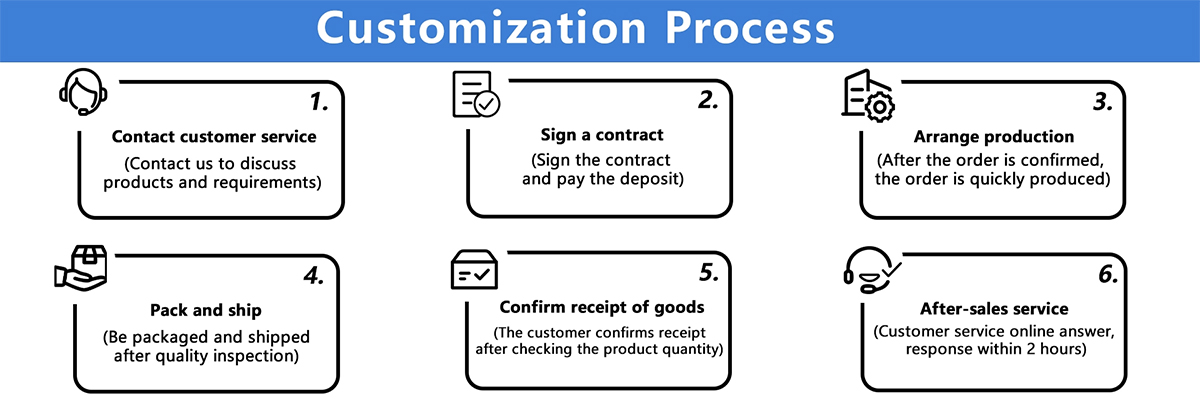
- Tell us the cover colour — black, white, yellow or amber — and whether the standard build is what you want or you need a different colour.
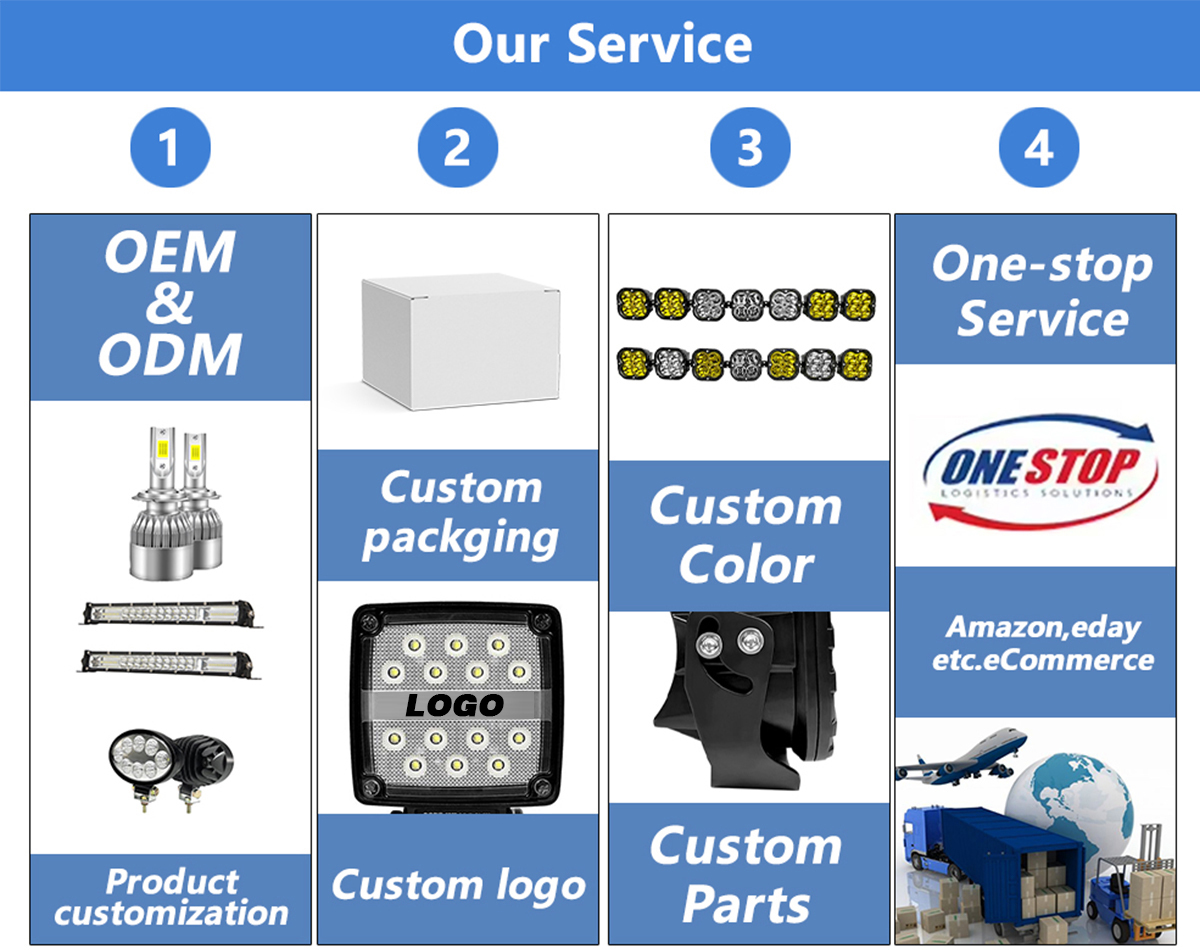
- Confirm your quantity and how you want the lamps packed. Your logo and your own packaging design can go on the order.
- We come back with the price, the payment terms and the shipping schedule for your destination.
- Stock items move on 7-day fast shipping. A custom colour, logo or packaging run changes that date, and we will tell you at quote stage by how much.
- Ask for the documents your market needs so they travel with the shipment rather than being chased afterwards.
- Check the cartons on arrival and photograph any transit damage before signing, so a claim can be raised straight away.
- We quote the same terms to a single shop and to off road led light bar suppliers buying by the pallet.
- If you already run an offroad led light bar range, this is the obvious first pod to add to it: the same customer, the same switched circuit, a different job.
Scale & Supply Capability
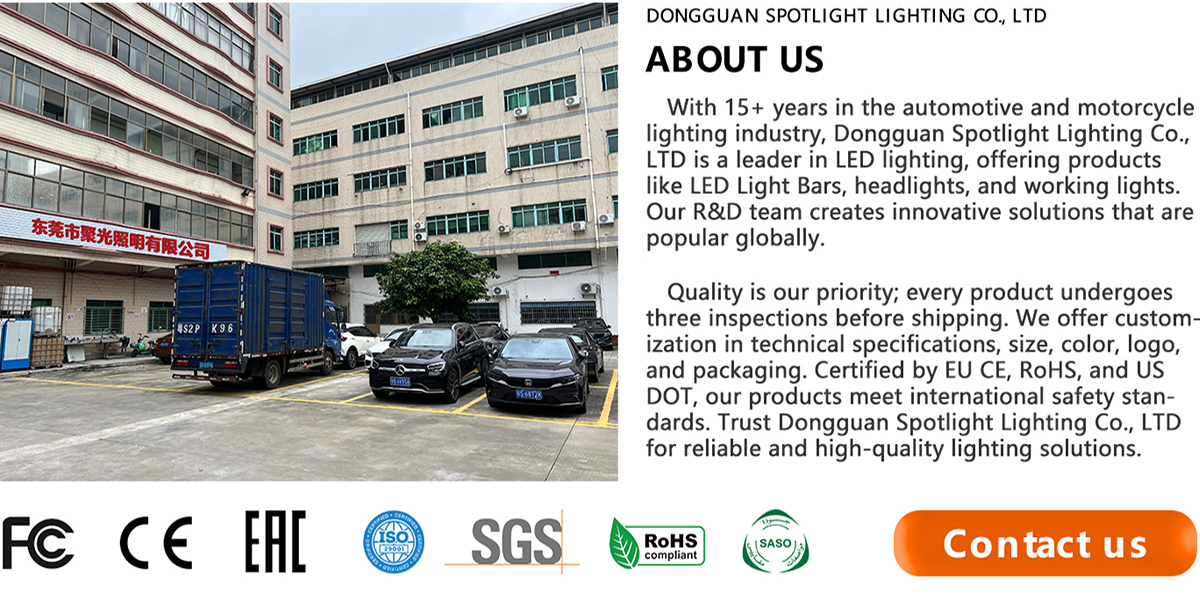
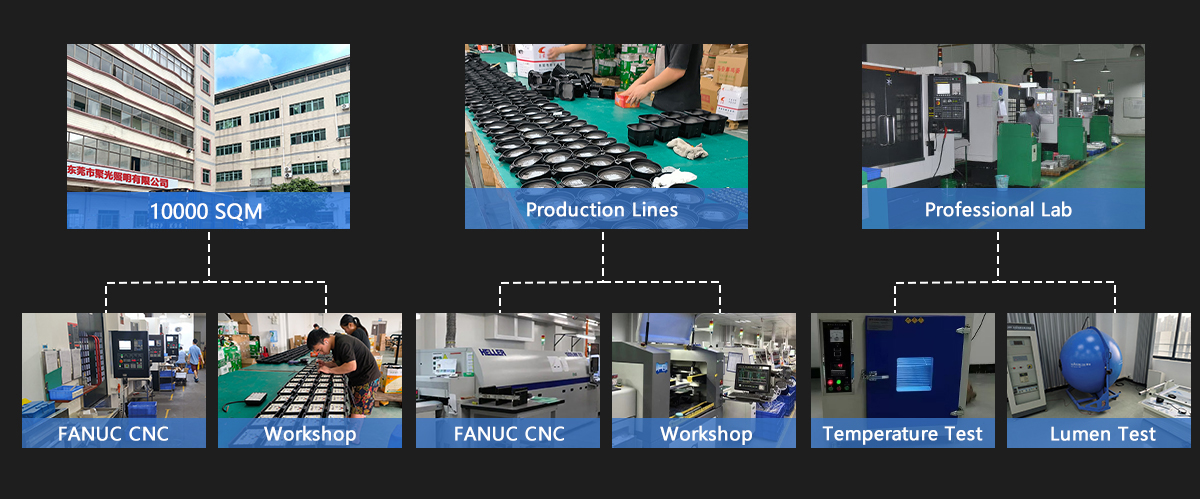
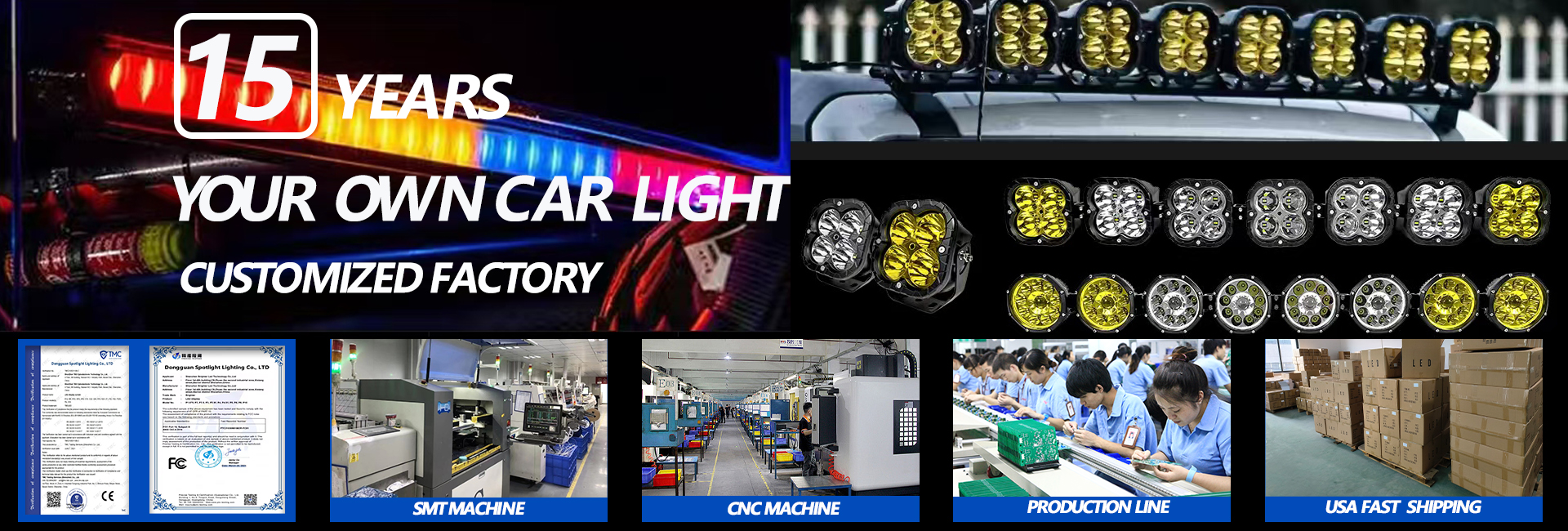
JOPOWER is the brand of our own factory in Dongguan, China, founded in 2010 and run by a team of 20–30 people with 15 years of vehicle lighting production behind them. We add 5–10 new styles every month, hold EU, CE, RoHS and US DOT certification, and put every unit through three full inspections before it leaves us. Because the designs are developed in-house, we can tailor specification, style, size, color, logo and packaging, and items in stock ship in as little as 7 days.
FAQ
Is this a spot or a flood led driving light?
Spot, as standard: a concentrated core for distance with just enough spill to read the verges. If a customer needs width — a yard, a work site, a trailer — mount two lamps and set them slightly apart, or ask us about a wider beam before you order.
What does the E-mark give my customers?
It is the marking European buyers ask for, and the paperwork that supports it can travel with the order. Tell us which market you sell into and we will confirm which documents apply and send the matching copies. What matters is that the document matches the lamp in the box.
Will it fit my vehicle?
It is a 5-inch round pod on an adjustable U-bracket, so it fits anywhere you can bolt a flat bracket: bumper, bull bar, A-pillar, roof rack or a rear work point. There is no vehicle-specific mount, so check clearance behind the mounting face and make sure the lamp has clear air in front of it. For off road led light bar suppliers building mixed fleets, that is usually the advantage — one bracket covers the whole yard.
Can I change the cover colour or add my logo?
Black, white, yellow and amber covers are standard, and other colours can be customised; your logo and packaging can go on the order as well. Cover colour is not only cosmetic — an amber cover tones the beam down for dust, snow and gritty air, where a hard white light washes out.
How is this different from a light bar?
A bar spreads light across a wide field, which is what you want on open desert running. This pod concentrates it: a 5-inch round body with a deep reflector puts a dense core further down the road in a package that fits where a bar will not. Plenty of buyers run both — an offroad led light bar for the open sections, pods for the tight ones.
Do I need a relay and a separate wiring kit?
Run it through a relay and a fuse on a switched circuit; that is normal practice for any auxiliary lamp and it protects the vehicle's wiring. The lamp is plug and play at its own connector, so check that the plug on your vehicle's wiring matches before you cut or adapt anything. Where a switch panel is already fitted, the lamp simply becomes one more circuit on the panel.
How should I clean and look after it?
Rinse off dust and mud with plain water and a soft brush, and use mild soap for road film — no solvents or abrasive polish on the polycarbonate lens. Off road lights that see salt or brine should be rinsed after a coastal or winter run, and a pressure washer should be kept off the seam where the lens meets the housing. Check the bracket bolts at every service; a lamp that has started to move will not hold its aim.