Product Overview
Built as a compact square auxiliary lamp, this 3.5-inch LED cube pod is one of those off road lights that mount where a bar will not fit: bumper corners, A-pillar brackets, roof racks, headache racks and rear work positions. These led driving lights are bought by people who fit lighting for other people, many of them ordering custom off road lights under their own brand: 4x4 and Jeep accessory resellers, aftermarket upfitters, repair shops adding a lighting line, and fleet purchasers standardising auxiliary lamps across trucks and utility vehicles. The same pod covers trail duty and yard duty, because the colour and the beam pattern change with the lamp covers rather than with a second part number. These compact 3.5-inch lights integrate easily into agricultural, utility, and expedition vehicles, improving safety and operational efficiency in low-light conditions. They meet CE, ROHS, and DOT standards for regulated industry environments. High-intensity LEDs provide clear, focused illumination for challenging terrain and weather. The compact, durable design supports reliable safety and productivity.
Housing & Weather Sealing
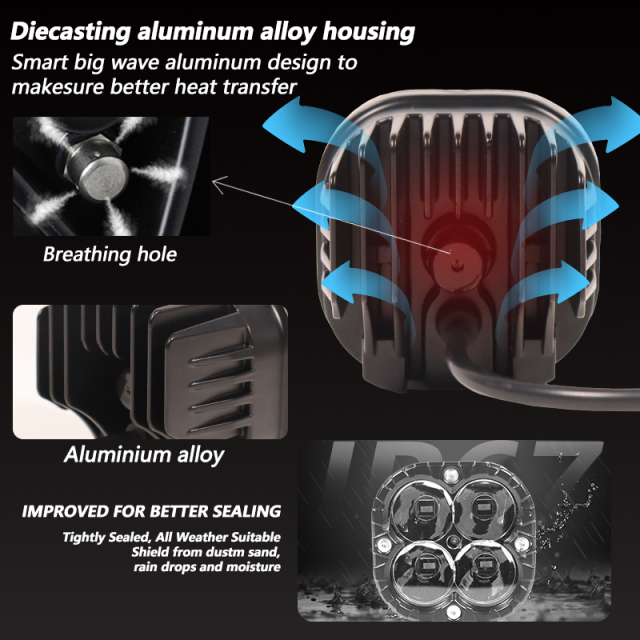
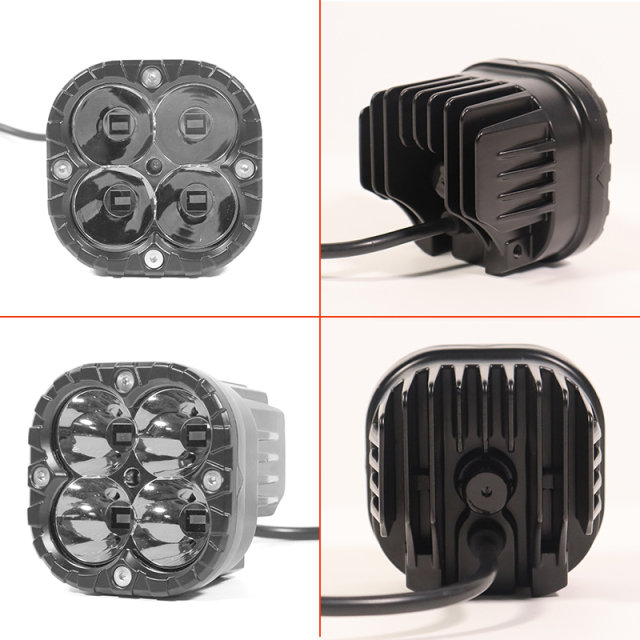
The body is die-cast aluminum alloy, cast rather than folded, so the fins on the back are part of the same piece of metal that carries the LED board. That matters at this size: heat leaves through the casting instead of through a pressed-on heatsink that can work loose on corrugated ground. The exterior is finished in matte black, and the front bezel is held by screws you can reach without dismantling the pod.
The lens is shock-proof polycarbonate, gasketed to the housing rather than friction-fitted. A small breathing hole on the body equalises pressure as the lamp heats and cools; without it, the seal would be pushed and pulled every time a warm lamp meets cold air, which is how most water ingress begins. Gasket and vent together are what hold the IP67 rating against dust and water.
We build these the way careful off road led light bar suppliers build their bar ranges - same sealing approach, same die-casting process, same inspection routine - applied here to a 3.5-inch cube. Buyers who are used to led driving lights for trucks that fog up after one wet season will notice the difference in the details rather than on a badge: gasket depth, vent placement, fin thickness.
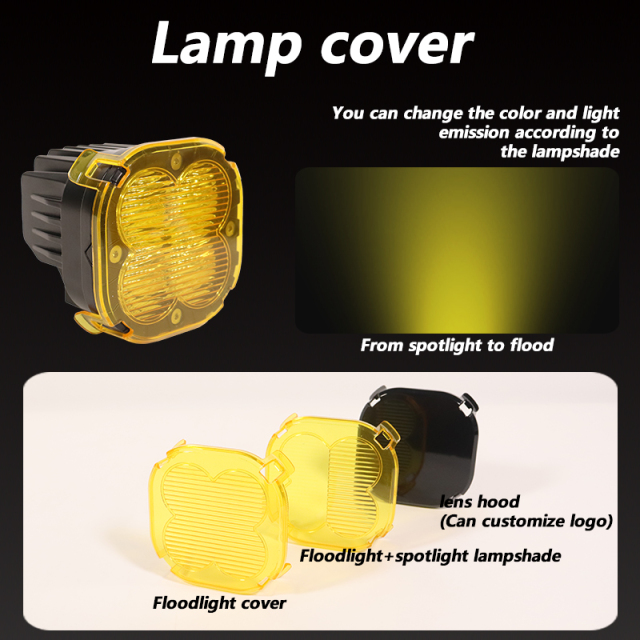
- One housing, several mounting positions. A single-bolt bracket lets the pod tilt and lock, so the same light works on a bumper corner, an A-pillar bracket, a roof rack or a rear work mount without a different shell. - Snap-on covers change the job, not the part number. Fit the yellow cover for fog and dust, the flood cover when you want a wide close wash of light, or the flood-plus-spot lens hood when you need reach and spread together. - The lens hood is the branding panel. On private-label orders your logo sits on the hood, so the light stays identifiable on the shelf and on the vehicle when it is switched off. - Sealed 2-way Deutsch DT connector with flying tails. Positive and negative leads are marked, the plug stays clean, and the most common wiring mistake drops out of the install. - Casting and fins in one piece. The back of the pod is a continuous finned surface, so these offroad led lights can sit close to a bumper or rack without trapping heat against a flat panel. - Service one pod, not the set. Every unit shares the same footprint and connector, so a damaged lamp is a straight swap inside an existing wiring loom - no re-drilling and no new relay.
Performance Advantages
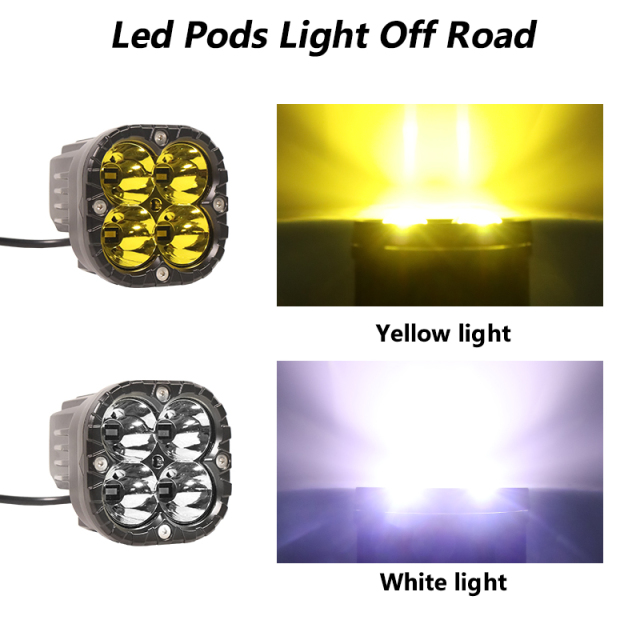
Output comes from 3570 high-intensity LED chips, and on a pod this size the beam shape decides how useful the light is far more than the headline figure does. The yellow version is set at 3500K, a tone chosen for penetration: it cuts through fog, dust and snow haze instead of bouncing back off it. The white version runs at 6000K for buyers who want a neutral wash across the trail or the yard.
Lifespan is rated at up to 50,000 hours, and that figure only holds because the thermal path is short - chips on a board, board screwed to the casting, fins in open air. Sealed and cooled properly, these led driving lights keep their output instead of fading as the lamp cooks itself through its first few seasons.
For anyone selling into fleets the advantages are commercial as much as technical. A single 12V–24V rating covers cars, trucks and 24V equipment, so fewer part numbers sit on the shelf and fewer picking errors happen at the counter. And because these led driving lights for trucks are sealed and vented, a return is far more likely to be a cracked lens than a drowned circuit, which keeps the paperwork short and the customer relationship intact.
Applications by Vehicle
- Jeep and 4x4 builds. Bumper corners, A-pillar brackets and roof racks on Wranglers and similar platforms, where a 3.5-inch cube fits the space a 4x4 off-road lights bar cannot.
- Pickup and heavy-duty truck fleets. Rear work positions, headache racks and front auxiliary mounts on led driving lights for trucks used for hauling and site work.
- ATV, UTV and side-by-side. Compact enough for a cage or a front rack, and sealed against the mud and wash water those machines live in.
- Agricultural equipment. Tractors, telehandlers and implements that need close-range light for loading, spraying or fieldwork after dark.
- Construction, utility and heavy machinery. Machine-mounted offroad led lights for excavators, loaders and service trucks working past sunset.
- Car, boat and motorcycle. 12V trailers, tenders and bikes where a small weather-sealed pod is the only practical fit.
Mounting, Wiring & Maintenance
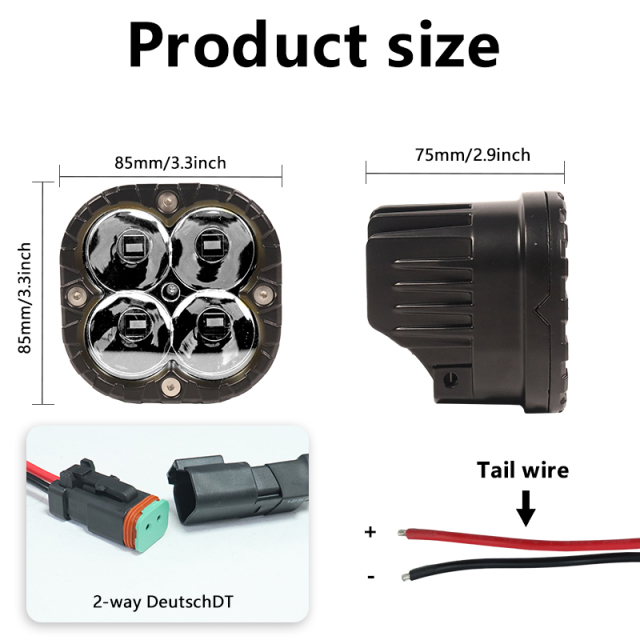
- Pick the position first: a flat, stable surface with clearance behind the pod for the cable and free air across the fins. Check the dimensioned front and side views in the gallery against your bracket before anything is drilled.
- Test-fit the bracket and the pod, then swing the lamp through its full aiming arc so you know the cover and the lens hood will clear the bodywork.
- Run the tails to a 12V–24V DC source and observe polarity: positive to the red lead, negative to the black. These off road lights run straight off the vehicle supply and do not need a separate driver box.
- Push the 2-way Deutsch DT plug fully home until it seats. A part-seated connector is the most common cause of an intermittent lamp.
- Aim before you torque: loosen the bracket bolt, set the beam so the cut-off sits below the eye line of oncoming traffic, then tighten the bolt down.
- Re-check the mounting bolts after the first hard run. Vibration beds a new bracket in, and a re-torque at that point saves a loose pod later.
- Keep the lens clean with water and a soft cloth - no solvent and no abrasive pad - and clear mud or chaff from the fins whenever the vehicle is washed.
Nighttime Trail Navigation
On a trail after dark, the useful light is the light that arrives early enough to change what you do. That calls for a beam with reach and a defined edge, not a broad glow that flattens the track into one grey plane. The yellow 3500K output is the setting most drivers leave on in dust, drizzle or falling snow, because it returns more contrast from the ground and less glare from the particles in the air.
Forestry tracks, mining haul roads and field edges put the same three stresses on any truck driving lights: fine dust that finds every joint, water thrown up from ruts, and constant vibration. A die-cast body with a gasketed lens and a vented cavity handles all three better than a plastic shell, and the compact footprint keeps the pod clear of branches and bodywork.
Mounted as auxiliary led driving lights alongside the standard headlights, the pods extend the lit zone without blinding the driver. Convoy work gains the most: a lead vehicle running yellow pods marks the line of the track for the truck behind, and rear-mounted lamps keep the group together when the trail doubles back. In practice that means fewer stops to walk the ground ahead and fewer unplanned delays on a low-light shift.
Maintenance & Recovery Lighting
- Roadside recovery. A rear or side-mounted pod lights the winch line, the shackle and the ground under the vehicle, so the operator can see the rigging instead of guessing at it.
- Yard work after dark. Fit the flood cover and these offroad led lights wash a whole bay, trailer bed or parts bench in light without dragging out temporary work lamps.
- Equipment inspection. Yellow output lifts the contrast on cracks, leaks and loose fittings in dust and drizzle, which is usually when inspections actually happen.
- Emergency response. A compact 4x4 off-road lights setup aimed slightly outward defines a working zone around the vehicle while the headlights stay free for the road.
- Field repairs on machinery. A pod on a service truck or tractor gives a hands-free pool of light where a torch would need holding, and the low draw lets it run off the battery with the engine idling.
- Trailer and load checks. Aim a pod at the bed or the hitch and the pre-departure walk-round becomes a two-minute job instead of a torch hunt.
Specifications
| Brand | JOPOWER |
| Housing | Die-cast aluminum alloy, matte black |
| Lens | Shock-proof polycarbonate |
| Waterproof rating | IP67 |
| LED chips | 3570 high intensity |
| Light colour | 3500K yellow / 6000K white |
| Operating voltage | 12V–24V DC |
| Beam options | Spot, flood and flood-plus-spot via lamp covers |
| Connector | 2-way Deutsch DT with positive and negative tails |
| Lifespan | Up to 50,000 hours |
| Mounting | Bracket mounted, single-bolt aiming |
Private-Label Programme
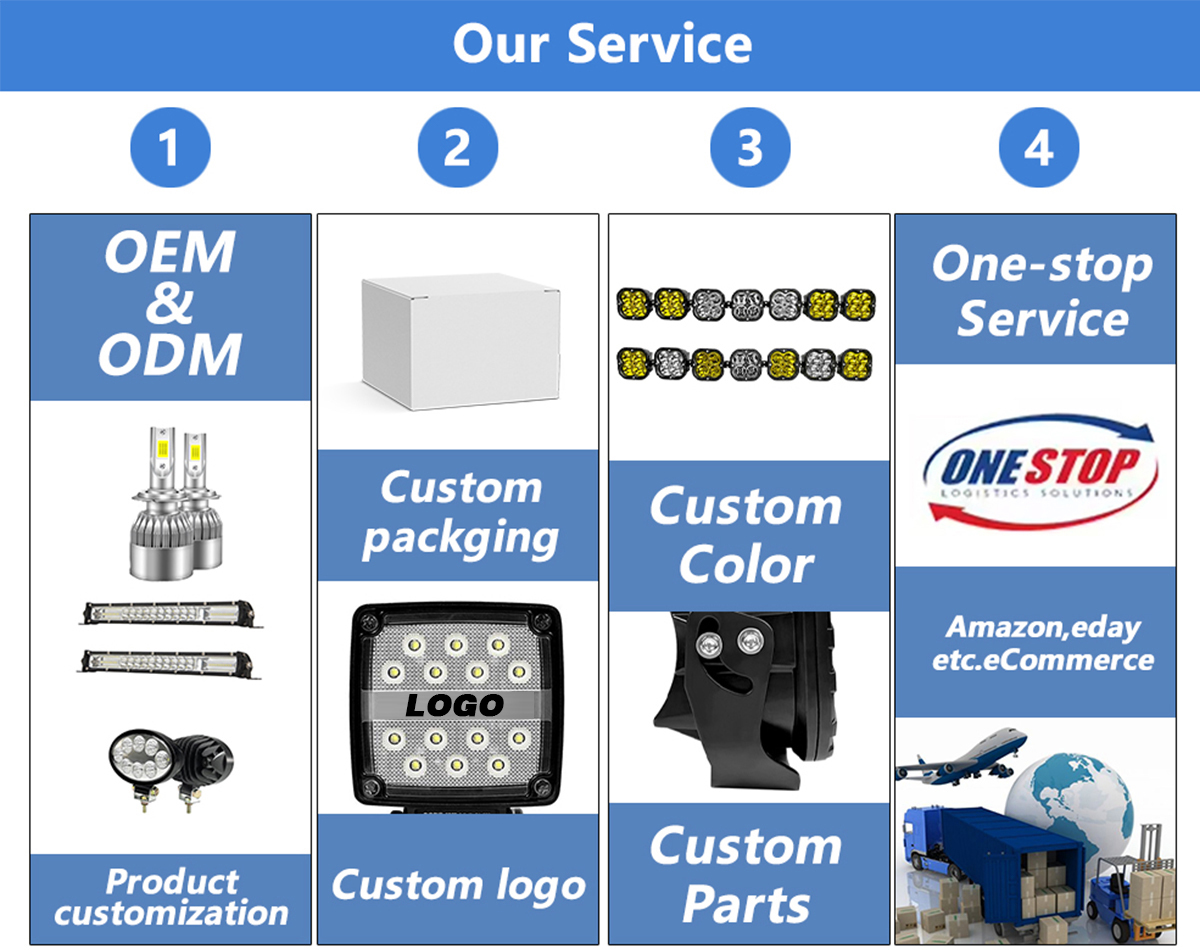
Most of the volume on this platform leaves us under someone else's name. We customise size, colour, logo and packaging, so a distributor can put a Jeep-fitment cube pod on the shelf with their own identity on the lens hood and their own carton in the warehouse. Colour here covers both the housing finish and the light output - a yellow-lens version for fog-led markets, a clear-lens white version where buyers expect a neutral beam.
Specification changes follow the same route. Cover sets, connector type, bracket finish and beam combination can all be fixed at the sample stage, and once they are agreed they stay fixed: the drawing that leaves our office is the drawing the line builds to, batch after batch. For buyers who have been let down before by off road led light bar suppliers that swap components mid-order, that consistency is worth more than a lower first quote.
Compliance matters just as much. Units are built to CE, RoHS and DOT standards, which is the paperwork a distributor usually needs before a lighting line can be listed in export markets. Because the factory is ours, a private-label custom off road lights order runs on our own production schedule rather than on a third party's.
Ordering & Delivery
- Stock lead time. Plain units from current stock ship in as little as 7 days; ask your sales contact to confirm the quantity you need against the production calendar.
- Custom runs. Logo, packaging and specification changes move to a scheduled production run, so confirm the lead time for your artwork and volume before you commit to a launch date.
- Minimum quantities. Minimum order quantities depend on the configuration you choose; your sales contact will quote them together with the price.
- Samples. If you want to check the beam and the cover set before a bulk order, ask your sales contact about sample availability.
- Packing. Units travel in protective cartons with bracket and hardware; private-label orders use your own printed packaging to your approved artwork.
- Mixed orders. Distributors already buying from off road led light bar suppliers can add these cube pods, switch panels, bars and truck driving lights to the same shipment - ask your sales contact to build the order across the range.
- Freight and documents. Shipping terms, destination port and paperwork are agreed at quotation, and we match the document set to the market you sell into.
Scale & Supply Capability
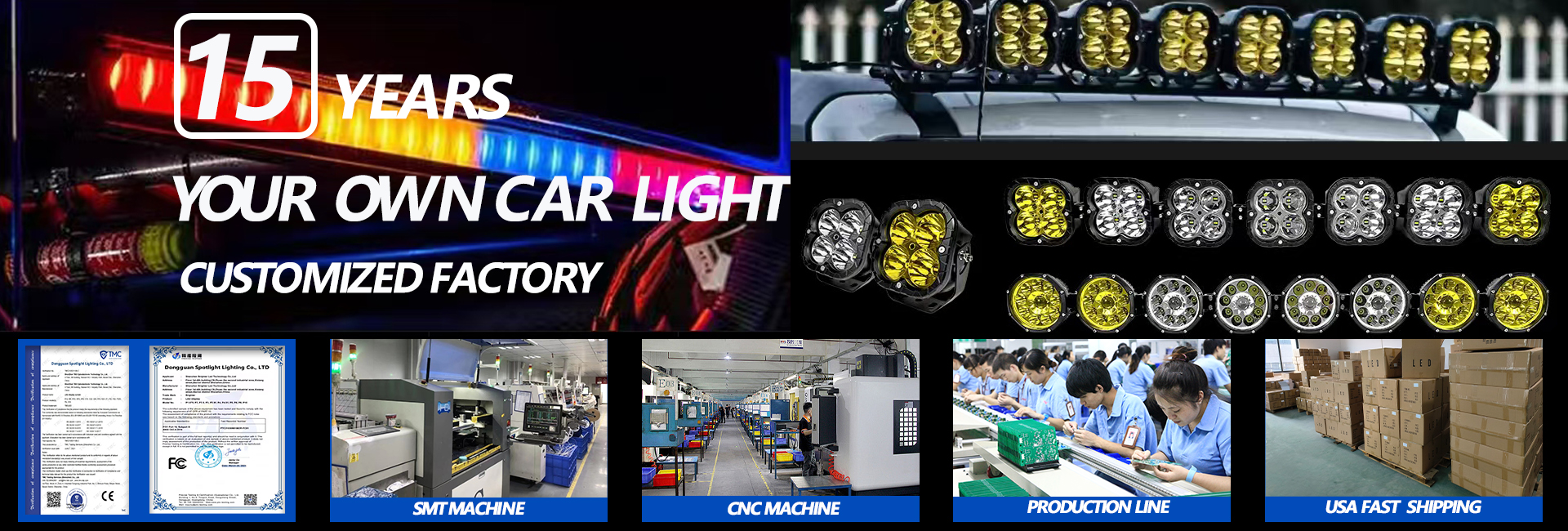
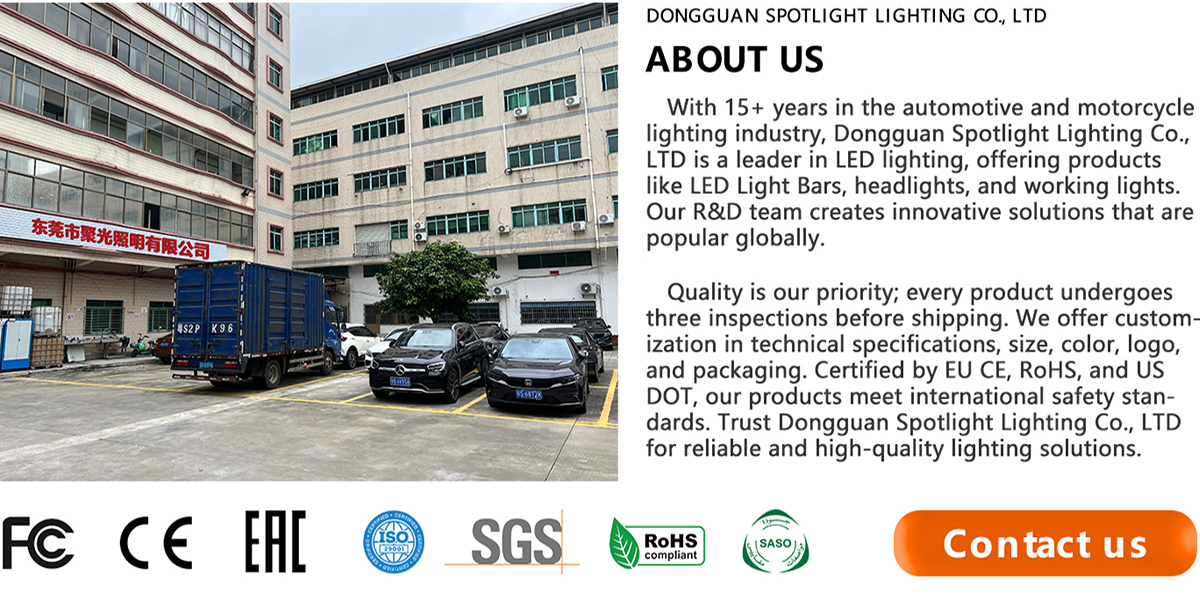
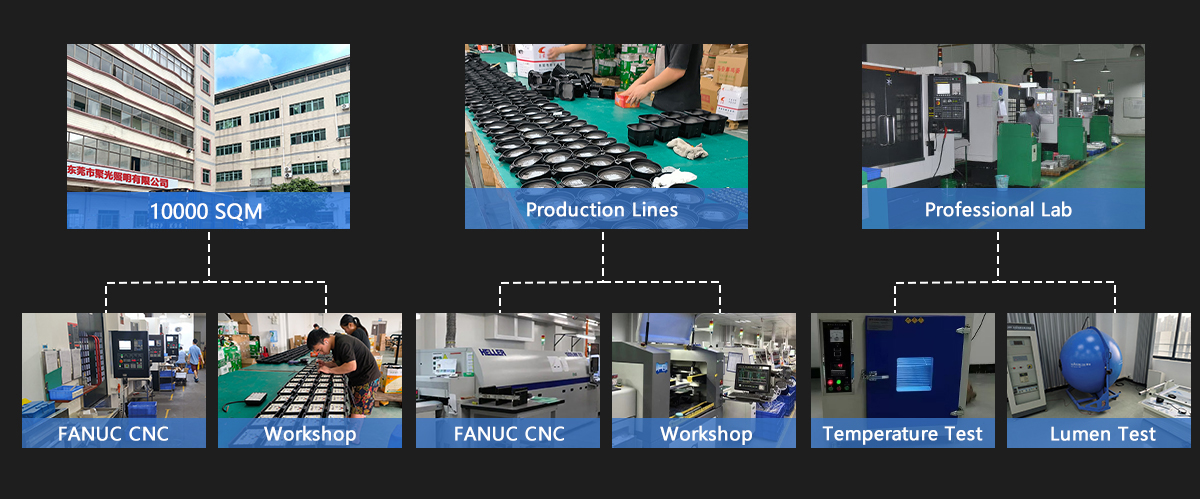
JOPOWER is the brand of our own factory in Dongguan, China, founded in 2010 and run by a team of 20–30 people with 15 years of vehicle lighting production behind them. We add 5–10 new styles every month, hold EU, CE, RoHS and US DOT certification, and put every unit through three full inspections before it leaves us. Because the designs are developed in-house, we can tailor specification, style, size, color, logo and packaging, and items in stock ship in as little as 7 days.
FAQ
Are these cube pods compatible with all Jeep and off-road vehicles?
They are built for 12V–24V DC systems, which covers a wide range of Jeep models, pickups, SUVs, ATVs, UTVs and most 4x4 off-road lights builds. Check two things before ordering: that the vehicle runs a 12V or 24V circuit, and that the mounting surface has room for the pod plus its cable exit. If you are fitting an unusual platform, send us the mounting position and we will tell you whether the bracket suits it.
What materials are used in the housing and the lens?
The body is die-cast aluminum alloy with a matte black finish, and the lens is shock-proof polycarbonate. Casting the body gives a continuous path from the LED board to the cooling fins and takes impact better than a folded steel shell. The lens is gasketed to the housing and the cavity is vented, so dust and water stay out while the air inside expands and contracts with temperature.
Can you customise these work lights for our own brand?
Yes - size, colour, logo and packaging are all open to your specification. Most buyers start with the lens hood logo, the light colour and the carton, then adjust the cover set or the bracket finish from there. Send your artwork and the market you sell into, and we will come back with what can be held on the current platform and what would need new tooling.
What are the recommended steps for installing the pods?
Most off road lights fail at the bracket or the connector rather than at the LED, so the order matters. Mount on a flat, stable surface with the bracket square to the beam direction, route the tails to a 12V–24V DC source, and connect positive to red and negative to black before pushing the Deutsch plug fully home. Aim with the bracket bolt just snug, set the cut-off below the eye line of oncoming traffic, torque it down, then re-check after the first run. Installation instructions and wiring guidelines ship with every unit.
Which output should I order - the 3500K yellow or the 6000K white?
Yellow at 3500K is the choice for fog, dust, snow haze and anywhere the air is full of particles, because it returns contrast instead of glare. White at 6000K gives a neutral wash that most drivers prefer for open trail and yard work. Plenty of buyers stock both and let the customer decide at the counter, since the covers make it easy to change the look later without buying another lamp.
Do the lamp covers change the beam as well as the colour?
Both. The yellow cover shifts the output toward the fog-friendly tone, the flood cover spreads the beam for close work, and the flood-plus-spot lens hood gives reach and spread at the same time. Covers are a snap fit, so one pod can be a trail light on Friday and a work light on Monday.
How long do the pods last, and what shortens their life?
They are rated at up to 50,000 hours, which for most users is the life of the vehicle rather than the life of the lamp. What shortens that figure is heat and water: blocked fins, a lens left caked in mud, or a connector that was never fully seated. Keep the fins clear and the plug home and the pod will hold its output.
Can these be used as reverse or work lights instead of driving lights?
Yes. On a rear bumper or a rack they work as reversing and work lighting, and the flood cover gives the wide close-range spread that job needs. Wire them through a switch within reach from the cab, or through one of our switch panels if the vehicle is carrying several lights. Front-mounted truck driving lights and rear work pods can share the same wiring and switch bank.