Product Overview
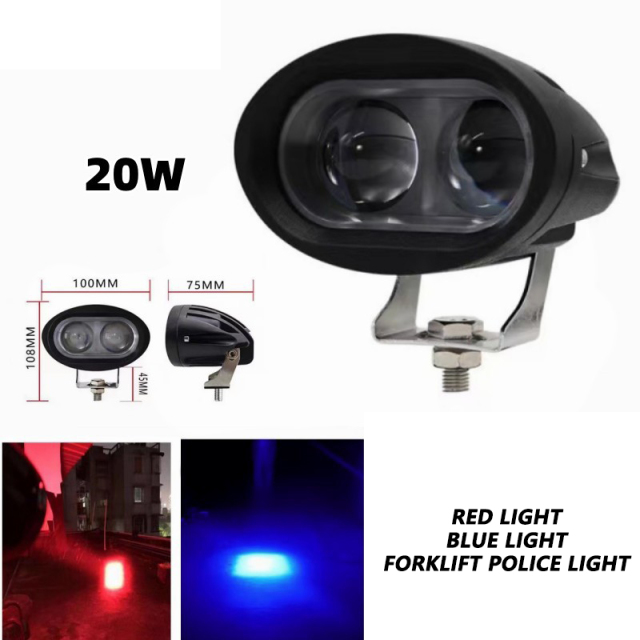
The JOPOWER blue ray warning lamp is a spot lamp with a safety job rather than an illuminating one. Bolted to a forklift, telehandler, sweeper or yard truck, it throws a blue spot onto the floor several feet ahead of the machine, so people on foot and other traffic see the light arrive at a corner or a trailer mouth before they see the truck itself. That single behaviour decides how the lamp is built. The beam is a tight spot rather than the wide wash of our work lamps and off road lights, the housing is a compact metal casting that takes a knock against racking, and the body is sealed against water, dust and vibration. This is not one of our led off-road lights and it does not replace the machine's own headlights. It exists to make a machine impossible to miss where it shares floor space with people. Parts shops and workshops keep it as a direct answer to a customer's near-miss complaint in the yard; fleets fit it as a safety item on trucks that work around pedestrians all day; race teams use it where a blue light is required on a night vehicle.
How the Blue Spot Protects People
A warning light only works if it is noticed at the right moment, and that shapes everything about this one. The spot lands on the floor in front of the machine, in the band of ground a walking person is already watching. Someone stepping out of an aisle sees the blue mark arrive at the corner before the truck's mast appears — the pause that prevents a collision.
High-mounted beacons have the opposite weakness. They can be seen from a long way off, but they do not say where the machine is going. A projected spot does: it moves with the truck, so the patch on the floor traces the path the machine is about to take. That matters most when a forklift reverses out of a trailer, turns at the end of a rack, or crosses a doorway where people walk past without looking up. A work lamp such as our off road led light bar is aimed at the ground the operator needs to see; this one is aimed at the people who need to see the truck.
Blue also separates the lamp from everything else on a working floor. Amber beacons, red stop lamps and white work lights already carry meaning for people who spend their shift around machines; blue sits outside that vocabulary, so the spot is not read as a reversing light or a turn signal.
The beam is deliberately narrow. Flooding a wide area would light the driver's work — which is what our work lamps are for — and it would flatten the contrast that makes the spot stand out. Led driving lights take a different route again, throwing a long beam down the road for the vehicle's own crew. This lamp is aimed at other people, and the optics are tuned for that alone.
Housing, Finish & Service Life
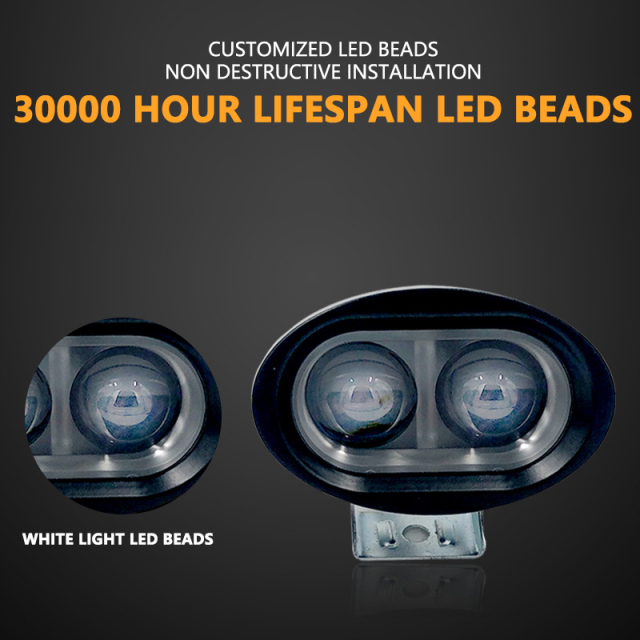
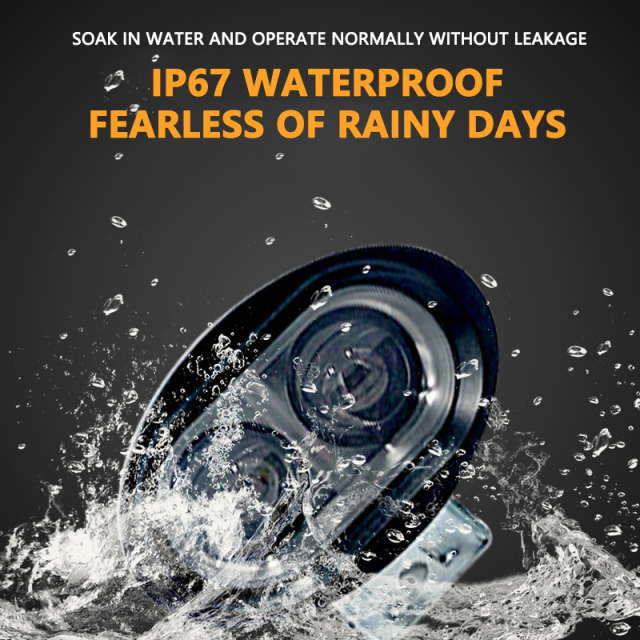
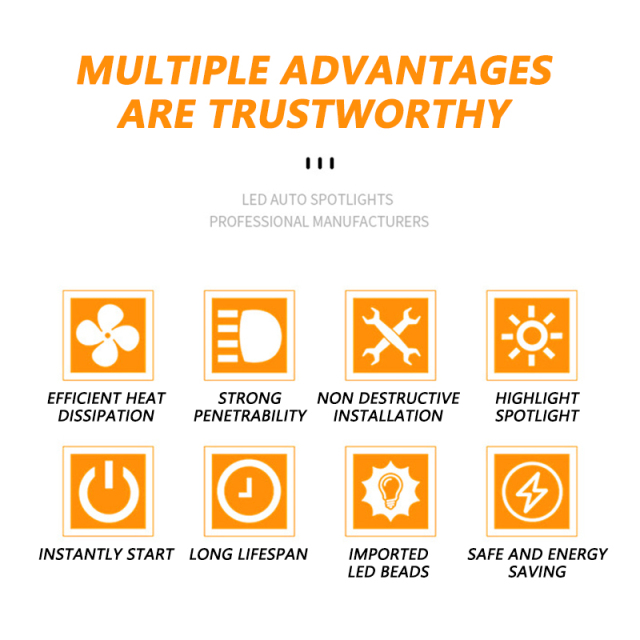
The housing does two jobs at once: it holds the optics steady and it carries heat away from the emitters. The LED board is fixed to a metal casting rather than suspended in plastic, so the heat path is short and the lens stays clear instead of yellowing as it bakes. The rear of the casting is shaped to spread that heat, which is why output holds steady through a long shift rather than fading after an hour. Sealing is what decides how long a warning lamp really lives. Water gets in at the lens joint and the cable entry; once it is inside, the reflector corrodes and the spot dims long before the emitter fails. This unit is built to resist water, dust, quake and impact, and the PC lens is a single high-transmission cover rather than a stack of parts that can work loose. The same die-cast approach carries across our offroad led lights, and what we learn as led light bar manufacturers — thicker castings at the mounting points, sealed cable entries — ends up in this lamp. Finish is settled at build time, not afterwards. In practice most replacements come from a cracked lens or a corroded connector rather than a dead emitter. A glance at the lens and the plug at every service catches both early. Clean the lens with water and a soft cloth — solvent and abrasive polish will haze polycarbonate — and never hold a high-pressure jet against the lens joint or the cable entry. - Die-cast aluminium alloy housing — the LED board is screwed into a metal casting instead of a plastic shell, so heat has somewhere to go and the lamp shrugs off knocks against racking, mast chains and dock levellers. - High-transmission PC lens — an upgraded polycarbonate cover passes more of the light through than a standard lens and takes impact without cracking or clouding. - A tight spot, not a flood — the beam stays compact at distance, so the blue mark on the floor reads as a warning rather than a soft glow that disappears into the general lighting. - Around 90% less draw than a general bulb — on an electric truck that current comes off the traction battery, so low consumption is a working-day benefit, not just a green claim. - Sealed against water, dust, quake and impact — the body is built to resist all four, which is what separates a lamp that survives a washdown bay from one that fogs up in its first wet month. - Holds its output when the machine runs hot — the alloy casting and PC lens are chosen for high-temperature resistance, so the warning stays bright through a long shift or a summer yard. - Light the instant you switch — LED output is there the moment the switch closes, with no warm-up while the truck is already moving. - Built the way we build our 4x4 off-road lights — the sealing, lens and heat path follow the same assembly and testing routine as our off-road range, scaled down to a small warning lamp. - Emitters from our own supply chain — the LEDs come from the same family we fit to our led off-road lights, so a reorder is built from a line we control rather than an unknown marketplace lot.
Mounting, Wiring & Aiming
- Choose a mounting point with a clear line forward — the front of the overhead guard, the top of the mast carriage or the front cowl. Nothing should stand in the beam between the lamp and the floor ahead.
- Check the supply at the point you plan to tap.
- Bolt the bracket down on a flat surface. Use an existing panel hole where the machine allows it, so you are not drilling the overhead guard.
- Wire through a switch that is live with the machine's lights, route the cable clear of heat sources and moving linkages, and protect the circuit with a fuse.
- Aim the spot at the ground where people step out, not at the horizon. Have someone walk the route in dim light while you adjust the bracket.
- Drive the aisle yourself with the lamp running and check the patch lands where a pedestrian would first appear.
- Re-check the fixing after the first week. Vibration on a forklift works bolts loose, and a lamp that has shifted is no longer aimed where you set it.
- If the machine already carries an off road led light bar, mount the warning lamp above or beside it rather than lower on the bumper — the bar is there to light the ground, this one is there to be seen.
- The two-core connection follows the same pattern as our led driving lights, so a technician who has wired one of those already knows the job.
Typical Sites & Situations
- Racking aisle ends — the classic blind corner, where a truck coming out of a cross-aisle and a picker walking the other way would otherwise meet with no warning.
- Dock doors and trailer mouths — the spot spills out of the trailer before the forklift reverses into the yard, so anyone crossing behind it gets a moment to stop.
- Yards and hardstanding after dark — where there is no building lighting to catch the machine and the blue spot is the first thing anyone sees.
- Production halls with mixed foot traffic — maintenance staff, cleaners and delivery drivers who do not know the truck routes by heart.
- Plant and heavy equipment — excavators, telehandlers, cranes and yard sweepers working around ground crews.
- Night race and support vehicles — where the regulations call for a blue light, teams mount this on the cage or bumper alongside their 4x4 off-road lights.
- Hire fleets and dealer stock — machines that already go out with offroad led lights and a beacon usually gain a warning lamp too, because a hire truck works in an unfamiliar yard every week.
Specifications
| Specification | Detail |
|---|
| Voltage | 12-24V DC |
| Light source | LED |
| Light colour | Blue (a red version is also supplied) |
| Beam type | Spot |
| Forward projection | Roughly 16-24 ft (about 5-7 m) ahead of the machine |
| Housing | Die-cast aluminium alloy |
| Lens | Polycarbonate (PC), high light transmission |
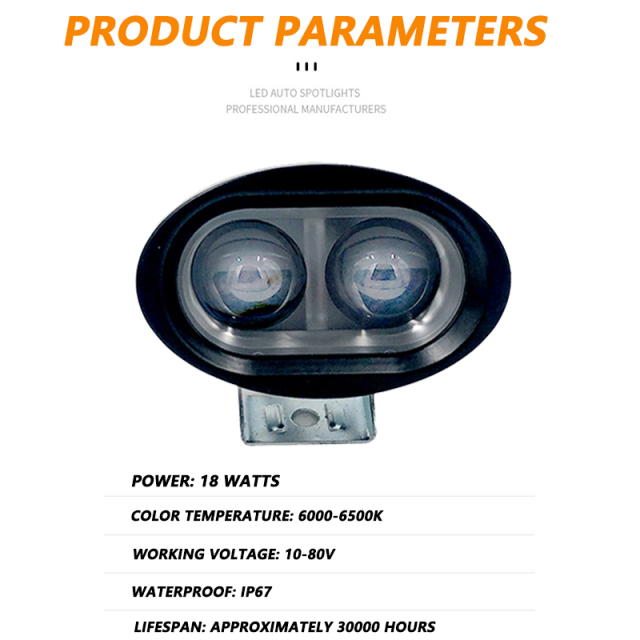
| Water and dust protection | IP67 |
| Rated life | 50,000 hours |
| Current draw | Around 90% lower than a general bulb |
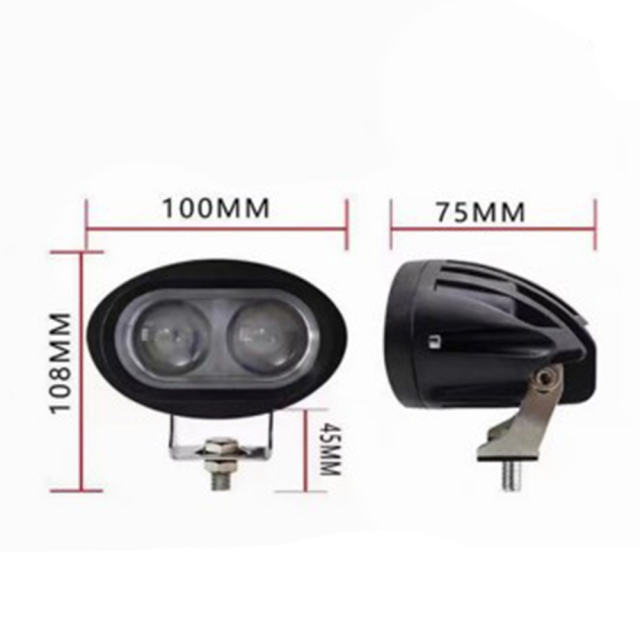
| Mounting | Metal bracket, bolt fixing |
| Typical fitting | Forklift and industrial equipment warning light |
Ordering & Delivery
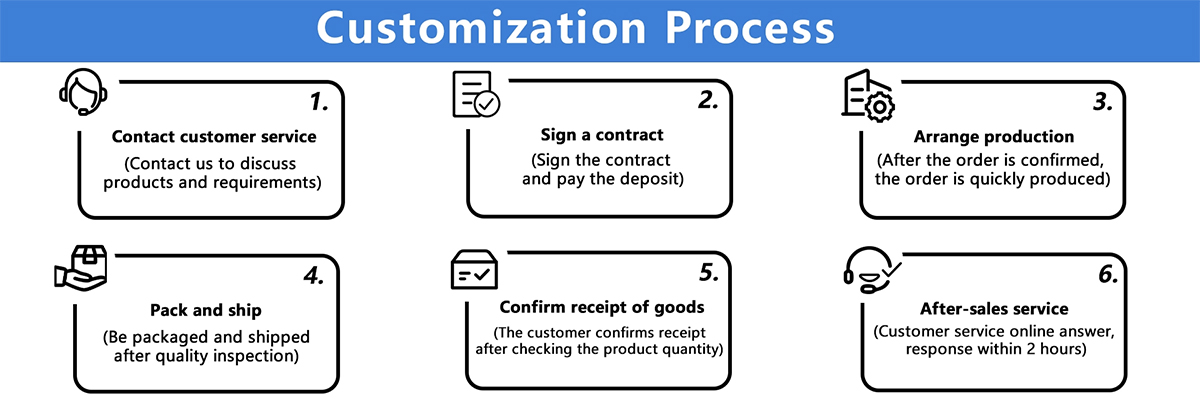
- Tell us the machine — the supply voltage at the lamp, the mounting point and the light colour your site uses are enough for us to confirm the right version before you commit.
- Blue or red — both are listed for this lamp. Say which one your site, or your customer's site, standardises on; everything else in the specification stays the same.
- Dispatch — we work to 7-day fast shipping on stock items. Confirm the current schedule with your sales contact when you place the order.
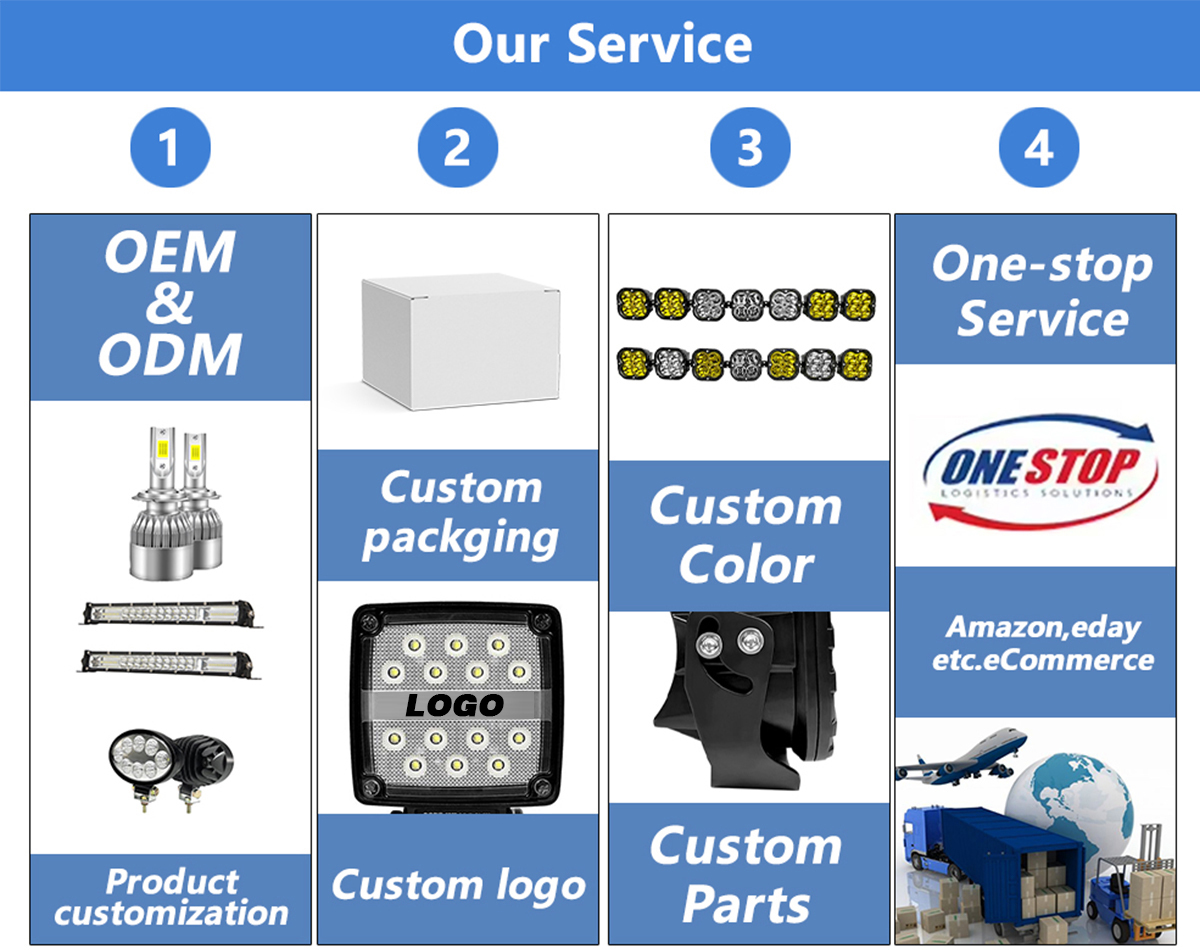
- Your branding — logo, housing colour and packaging can be tailored through the same custom off road lights service that handles branding on our bars and pods, and artwork is approved with you before production.
- Payment and freight — terms, freight cost and delivery point are agreed with your sales contact at the time of ordering.
- Spares — if the lamp is going onto a fleet, add a spare to the same order so a replacement is already on the shelf when a machine needs one.
Fleet Rollout & Spares
- Fit one machine first and check the aim in the yard where it actually works — a spot set in daylight can sit too high once the floor is busy.
- Agree the standard before you buy the rest: light colour, mounting point and switch feed, written down so every truck on site matches.
- Record what you fitted, including the bracket position, so a replacement goes back in the same place without re-aiming from scratch.
- Keep a spare lamp for every site or shift that cannot run without the machine — a warning light that is out is a machine that should not be moving.
- Check the lens and the fixing at each service, and re-aim after any impact with racking or a trailer.
- Reorders stay consistent: we build these ourselves rather than buying them in, and as led light bar manufacturers the tooling and lens supply stay under our control, so a replacement matches the units already fitted.
Scale & Supply Capability
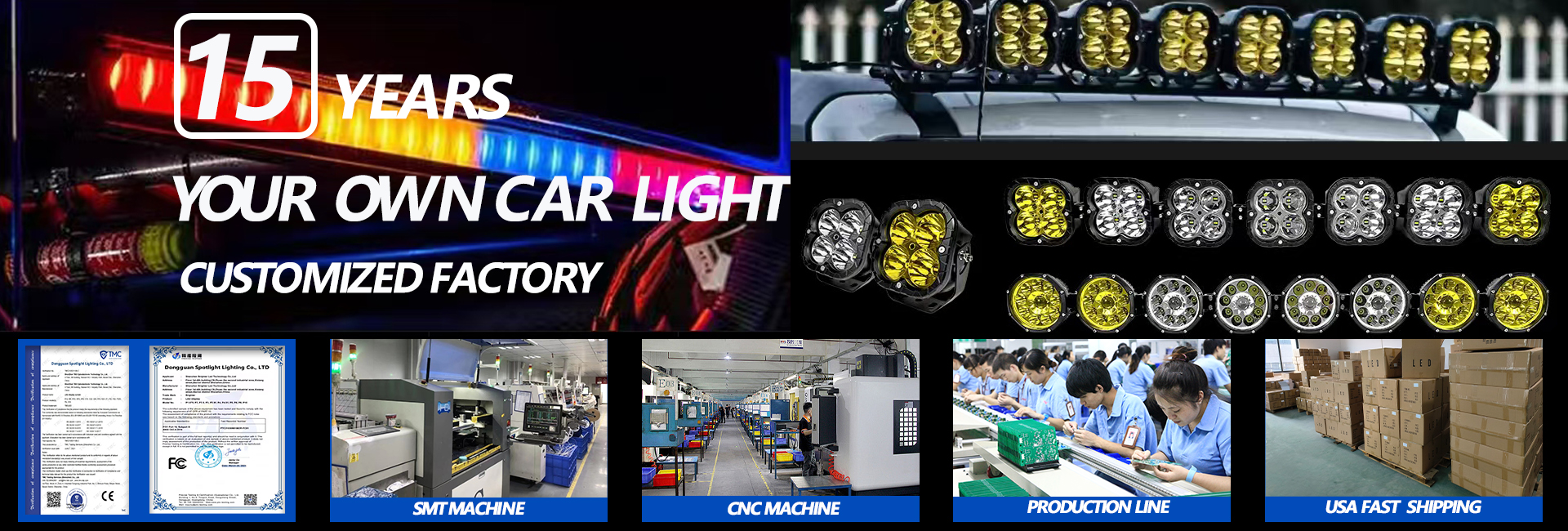
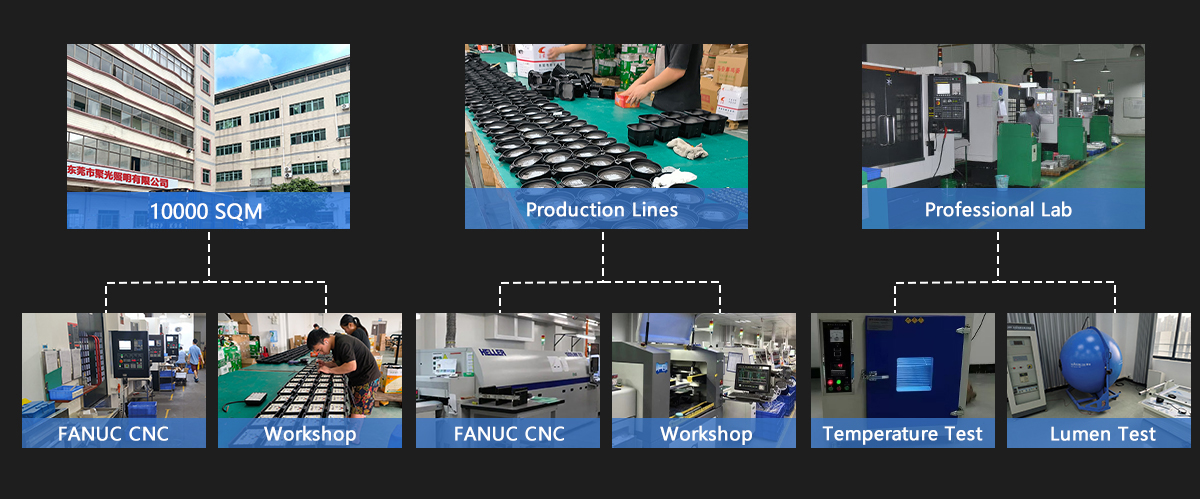
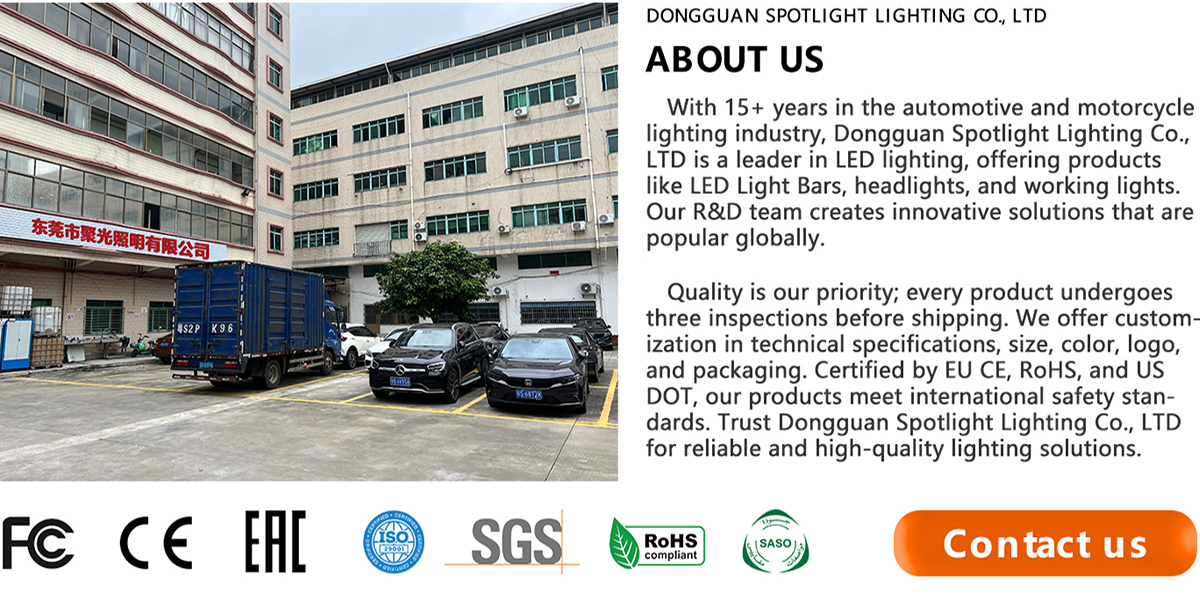
JOPOWER is the brand of our own factory in Dongguan, China, founded in 2010 and run by a team of 20–30 people with 15 years of vehicle lighting production behind them. We add 5–10 new styles every month, hold EU, CE, RoHS and US DOT certification, and put every unit through three full inspections before it leaves us. Because the designs are developed in-house, we can tailor specification, style, size, color, logo and packaging, and items in stock ship in as little as 7 days.
FAQ
Is this a work light or a warning light?
It is a warning light. The spot is aimed at the floor ahead of the machine to tell people the machine is coming; it does not light the driver's working area. If the job is to see a trailer bed or a load at night, a work lamp is the right tool. The one overlap is racing, where teams already running 4x4 off-road lights add this lamp because the regulations call for blue light.
How far ahead of the machine does the blue spot appear?
Roughly 16 to 24 ft (about 5 to 7 m) in front of the lamp, depending on how you set the bracket. That is a deliberate range: far enough for someone at an aisle end to see it and react, close enough that the mark stays a distinct spot rather than a wash of blue. Unlike our off road lights, which spread light over the ground around the vehicle, this beam is meant to stay compact at that distance.
Will it survive rain, washdowns and dust?
It uses the same sealed construction as our led off-road lights, scaled down for a warning lamp: an IP67 body built to resist water, dust, quake and impact, with the emitters under a single PC lens. It handles wet yards, washdown spray and dusty floors. The one thing to avoid is holding a high-pressure jet directly against the lens joint or the cable entry, which is true of any sealed lamp.
Can we have our logo on it, or the light in red?
Both are possible. Blue and red are listed for this lamp, and housing colour, logo and packaging can be tailored. It goes through the same custom off road lights process we use for branded bars and pods, and the artwork is approved with you before production starts.
Can it double as a driving light?
No, and it is worth being clear about that, because a blue spot is not much use for seeing with. Led driving lights throw a long white beam down the road for the driver; this lamp is tuned to be seen by other people. Fitting it alongside the machine's existing lighting is the right way to use it.
Where is the recommended location to mount it on a forklift?
High and forward: the front of the overhead guard or the top of the mast carriage, with nothing between the lamp and the floor ahead. Unlike offroad led lights, which usually sit low on a bumper or bullbar, this lamp performs most effectively from a position that lets the spot reach the ground well in front of the truck.
Can it share the machine's existing lighting circuit?
Yes. Take the feed from the same switched circuit that runs the machine's beacon, work lamp or off road led light bar, and keep that circuit fused. Tapping an existing feed is quicker than running a new loom, and it means the warning light comes on with the rest of the machine's lighting.
Who builds the lamp, and can I get the same one again?
It is built in our own plant in Dongguan, not bought in and rebadged. As led light bar manufacturers we cast, assemble and test on the same lines, so a reorder matches the units already on your machines — which matters when a fleet standardises on one warning lamp.